
Chronic Pain
Chronic Neck Pain: Causes and Non-Surgical Treatment Options
In Medellín from $2,000 USD · 5–10 day stay Get a free quote →
What Causes Chronic Neck Pain?
Neck pain becomes "chronic" when it lasts beyond about three months, and it rarely has a single cause. The cervical spine is a stack of seven small vertebrae that support the weight of your head while allowing a remarkable range of motion. That flexibility makes it vulnerable to wear, strain and injury over time.
The most common source is age-related change in the cervical discs. As discs lose water and height, a condition called cervical disc degeneration, the spine becomes stiffer and the surrounding structures absorb more stress. Sometimes the soft center of a disc pushes outward, a herniation, which can press on nearby nerves. Closely related is facet arthropathy, or arthritis of the small paired joints at the back of the spine that guide movement; these joints are a frequent and often overlooked generator of neck pain.
Other causes are mechanical or traumatic. Whiplash from a car accident or fall can strain muscles, ligaments and joints for months. Modern posture habits play a large role too: hours spent looking down at phones and laptops, often called "tech neck," overload the muscles and joints and are an increasingly common reason younger adults seek care. When a degenerated disc or bone spur irritates a nerve root, the result is cervical radiculopathy, which can radiate pain, numbness or tingling into the shoulder, arm or hand. Identifying which of these is driving your pain is the foundation of effective, non-surgical treatment.
The Diagnostic Workup
Because so many structures can cause neck pain, an accurate diagnosis matters more here than almost anywhere in the body. A board-certified pain specialist begins with a thorough history and physical examination, mapping where the pain travels, what makes it worse, and whether there is any weakness, numbness or loss of reflexes that points to nerve involvement.
Imaging usually follows. X-rays show alignment, disc-space narrowing and bone spurs, while an MRI provides detailed views of the discs, nerves and spinal cord and is the standard tool when radiculopathy or a herniation is suspected. In selected cases, nerve conduction studies help distinguish a pinched nerve in the neck from a problem further down the arm.
One of the most useful diagnostic steps is also a treatment: a precisely targeted, image-guided injection. If a small dose of local anesthetic placed at a specific facet joint or nerve temporarily relieves your pain, it confirms that this structure is the source, which then guides longer-lasting treatment. This careful, evidence-based approach prevents treating the wrong target and is central to how responsible pain medicine works. You can read more about the broader framework in our overview of chronic pain treatment in Colombia.
Conservative Treatment Comes First
For the great majority of people, the first line of treatment is conservative, meaning non-invasive, and for many it resolves the problem without any procedure at all. The cornerstone is physical therapy. A skilled therapist strengthens the deep stabilizing muscles of the neck and upper back, restores mobility, and corrects movement patterns that keep aggravating the joints.
Posture and ergonomics are addressed in parallel because they are often the root of "tech neck." Simple changes, such as raising a screen to eye level, supporting the lower back, taking regular movement breaks and adjusting how you hold a phone, can dramatically reduce the daily load on the cervical spine. These habits also protect the gains made in therapy.
Medication plays a supporting role rather than a leading one. Short courses of anti-inflammatory drugs, muscle relaxants or, in specific cases, nerve-pain medications can calm a flare while other treatments take effect. Responsible care avoids long-term reliance on opioids. The goal of conservative treatment is not just temporary relief but durable improvement, and only when a well-conducted conservative program fails to provide enough relief does a specialist consider the interventional options described next. The same staged philosophy applies to the lower spine, as we explain in our guide to chronic back pain.
Image-Guided Interventional Options
When conservative care has been given a fair trial and pain persists, interventional pain medicine offers a middle path between doing nothing and major surgery. These procedures are minimally invasive, performed with imaging guidance such as fluoroscopy or ultrasound so the medication reaches exactly the right spot, and most are done on an outpatient basis.
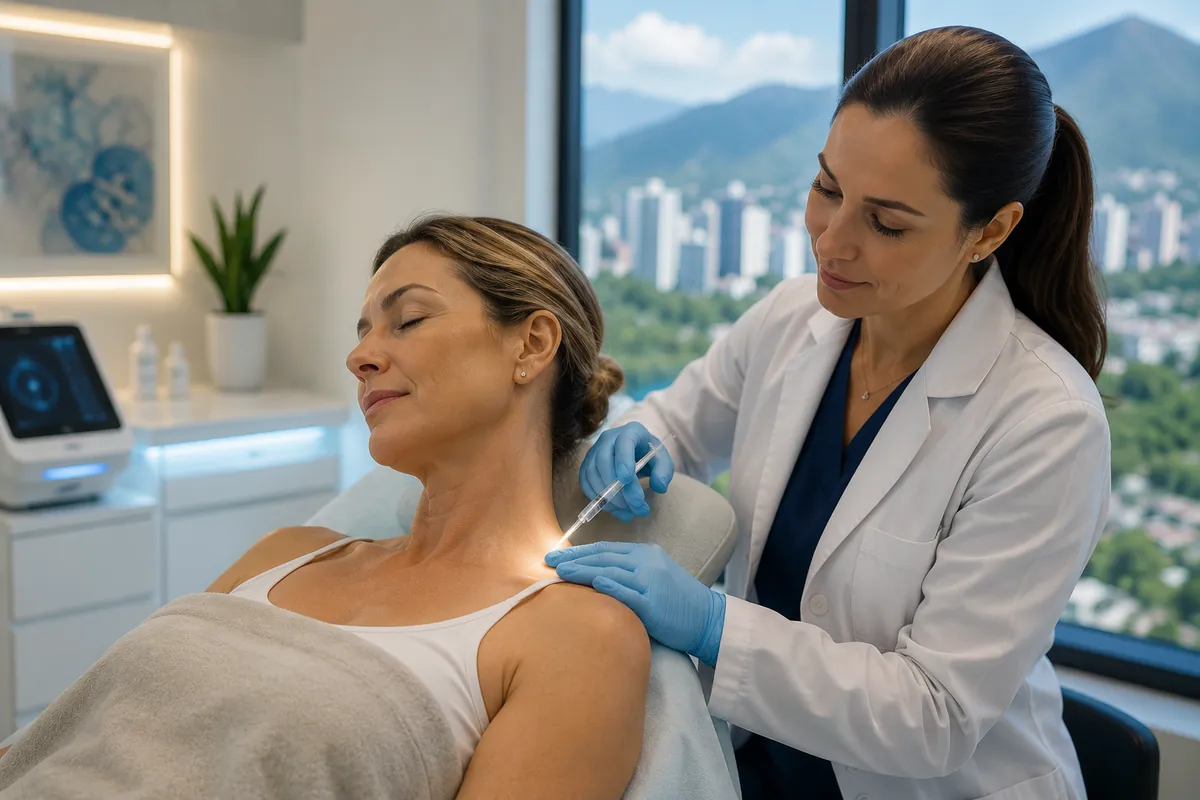
For nerve-related pain or radiculopathy, a cervical epidural steroid injection places anti-inflammatory medication around the irritated nerve to reduce swelling and pain. When the facet joints are the source, a facet joint injection can calm the inflammation directly. To pinpoint facet-related pain, a specialist may first perform a medial branch block, numbing the tiny nerves that supply a joint; if it provides clear, temporary relief, it both confirms the diagnosis and opens the door to a longer-lasting solution.
That longer-lasting solution is often radiofrequency ablation, a procedure that uses heat to interrupt the specific nerves carrying pain signals from an arthritic facet joint, frequently providing relief that lasts many months. You can learn how it works in our dedicated article on radiofrequency ablation. In carefully selected cases where tissue healing is the goal, regenerative options such as platelet-rich plasma (PRP) may be discussed; the evidence here is still developing, so a responsible specialist presents it honestly as an emerging option rather than a proven cure.
Can This Approach Help You Avoid Surgery?
One of the most common questions patients ask is whether non-surgical treatment can help them avoid an operation. The honest answer is that it often can, but not always, and any clinic that promises a guaranteed alternative to surgery should be viewed with caution.
What the evidence supports is this: a structured, multidisciplinary and image-guided program, combining therapy, lifestyle change and targeted injections, helps many people control their pain well enough that surgery becomes unnecessary or can be postponed for years. Because the procedures are minimally invasive, trying them first does not close the door on surgery later if it is truly needed.
There are, however, clear situations where surgery is the right choice and should not be delayed. Progressive weakness, signs of spinal cord compression, or pain that fails every reasonable conservative and interventional measure are warnings that a surgical opinion is warranted. A trustworthy pain specialist works alongside spine surgeons and will refer you when surgery is genuinely indicated rather than pushing procedures that will not help. This balanced judgment, knowing both when to intervene and when to refer, is the hallmark of responsible care, and it is exactly the standard HealthBridge looks for in the specialists it works with. You can learn more about our role on the HealthBridge home page.
Cost, Your Program Stay and Safety in Medellín
Cost is a major reason international patients explore care in Colombia. Image-guided pain procedures and a full course of physical therapy are substantially more affordable in Medellín than in the United States, often a fraction of the price, while being performed by board-certified specialists in accredited facilities. Because the right plan depends entirely on your diagnosis, HealthBridge helps you obtain a clear, itemized quote after your evaluation rather than a one-size-fits-all figure, so you understand exactly what is included.
A typical program is designed around a stay of roughly 5 to 10 days. The first days are devoted to consultation, imaging and a precise diagnosis. Depending on what the workup reveals, treatment may begin during the same visit, whether that means starting a tailored therapy program, performing a diagnostic block, or carrying out an interventional procedure such as a facet injection or radiofrequency ablation, followed by early follow-up before you travel home. Your specialist will also give you a clear plan to continue at home.
Safety rests on credentials and honest expectations. HealthBridge is a facilitator, not a clinic: we connect you only with board-certified pain specialists working in accredited facilities, and we coordinate consultations, vetting, logistics and aftercare. Our medical director and coordinator, Dra. Olga Gonzalez, guides you in plain language through your diagnosis and the options your specialist proposes. Medellín's mild, spring-like climate, comfortable recovery accommodations and convenient flight access from several U.S. cities make it a practical place to address a problem that may have limited your life for years, with realistic goals and attentive, personalized care.
Considering chronic pain in Colombia?
See the procedure, pricing and the process for international patients on our Chronic Pain Management.
Procedure guides: Interventional Pain Management in Colombia
«Before any interventional procedure there has to be a diagnosis that explains the pain. Injecting without knowing which structure hurts is treating a symptom blind.»

Dra. Olga González, Medical Director, HealthBridge Medical Tourism, Aesthetic Medicine Physician · Longevity & Regenerative Medicine · Health Coach in Nutrition