Chronic Pain
PRP Therapy for Joint Pain: What to Know
What is platelet-rich plasma (PRP)?
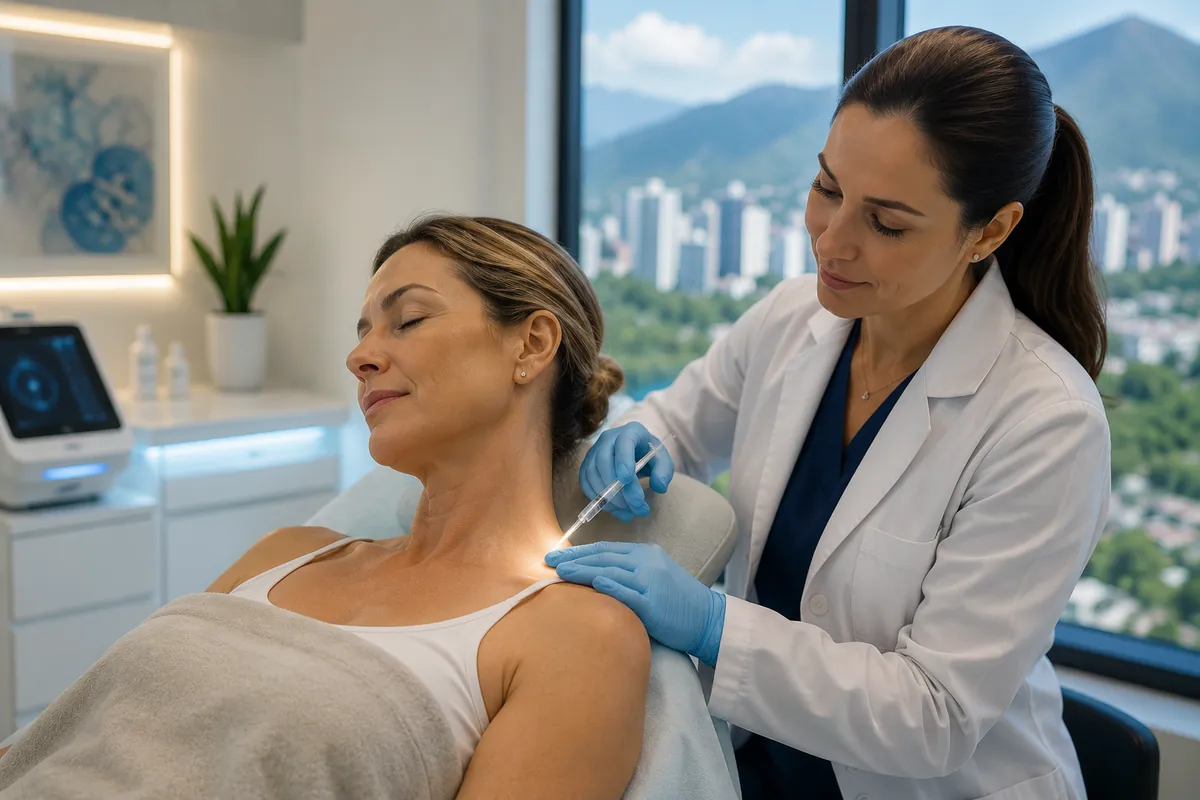
Platelet-rich plasma — almost always shortened to PRP — is one of the more approachable entry points into regenerative medicine, partly because it starts with something completely your own: your blood. To prepare PRP, a clinician draws a small sample of blood, much like a routine lab test, and then spins it in a centrifuge. That spinning step separates the blood into layers and concentrates the platelets, the tiny cell fragments that play a central role in clotting and in the body's natural repair signaling. The resulting concentrate, rich in platelets and the growth factors they carry, is what gets injected back into the area that hurts.
The underlying idea is straightforward in principle: platelets release growth factors that are involved in tissue healing, so delivering a concentrated dose directly to an injured joint or tendon may, in theory, support the body's own repair processes. It's important to frame this honestly. PRP is not a drug, a stem cell product or a miracle injection — it is a concentration of your own platelets, and the science around exactly how much it helps, and for whom, is still an evolving area. At HealthBridge we describe PRP the same careful way we describe other regenerative options: it may support recovery in carefully selected patients, as one part of a thoughtful plan, never as a guaranteed fix.
If you are weighing PRP, it usually fits within a broader conversation about chronic pain treatment in Colombia, where the goal is a layered, individualized approach rather than a single magic solution.
How PRP is used for joint and tendon problems
Most people who ask us about PRP are dealing with persistent joint or soft-tissue pain that hasn't fully settled with rest, physiotherapy or other first-line measures. The most studied use — and the one patients ask about most — is mild-to-moderate knee osteoarthritis, where PRP is explored as a way that may help with pain and function in some people who aren't ready for, or are trying to delay, more invasive options.
Beyond the knee, PRP is also used for a range of tendon-related problems. Common examples include tennis elbow and golfer's elbow (lateral and medial epicondylitis), rotator cuff and shoulder tendon issues, and plantar fasciitis — that stubborn heel and arch pain that can linger for months. In these cases the injection is targeted at the specific tendon or insertion point that's involved.
What ties all of these together is the principle of careful selection. PRP is not equally suited to every joint, every diagnosis or every stage of disease — for example, very advanced "bone-on-bone" arthritis tends to respond differently than milder disease. That's exactly why a proper evaluation, usually including a look at your imaging and history, comes before any recommendation. PRP also doesn't replace the fundamentals: physiotherapy, strengthening, weight management and good overall health remain essential, and PRP is best thought of as a possible addition to that foundation rather than a substitute for it.
The procedure: blood draw, centrifuge, image-guided injection
One of PRP's main appeals is how simple and self-contained the procedure is. It is performed on an outpatient basis and usually takes well under an hour from start to finish. The first step is a blood draw — a small sample taken from your arm, just like a standard blood test. That sample is then placed in a centrifuge, which spins it for several minutes to separate and concentrate the platelets into the plasma fraction used for treatment.
Once the platelet-rich plasma is prepared, it is injected back into the target area. In a well-run program this is typically an image-guided injection — using ultrasound, for example — so the clinician can place the concentrate precisely into the joint, tendon or insertion point that needs it. Image guidance helps with accuracy and is part of doing the procedure properly and safely under sterile, physician-supervised conditions. Most patients tolerate the injection well, though some discomfort at the injection site is normal.
Because PRP often works best as part of a course rather than a one-time event, your clinician may recommend a series of injections spaced over weeks, depending on your condition and how you respond. The exact protocol — how many sessions, how far apart — is individualized, which is another reason a personalized plan only makes sense after a proper assessment.
What the evidence suggests — and realistic expectations
Honesty about the evidence matters here. PRP is an evolving area of medicine, and the research picture is genuinely mixed: some studies suggest PRP may help certain patients — particularly those with mild-to-moderate knee osteoarthritis and some tendon conditions — while other studies show more modest or inconsistent results. Preparation methods, protocols and patient selection vary between studies, which is part of why the science is still being worked out. The responsible summary is that PRP may help some people, that results vary from person to person, and that it is not a guaranteed cure.
That framing leads directly to realistic expectations. PRP is not a single magic injection that erases pain overnight. When improvements occur, they tend to develop gradually over weeks as any repair response plays out, and as noted above the protocol often involves a series of injections rather than one. Some patients notice meaningful improvement in pain or function; others notice little change — and a trustworthy provider will tell you this clearly before you decide anything, rather than promising specific success percentages.
We deliberately avoid hype. The right way to think about PRP is as a reasonable, low-from-your-own-body option that may be worth exploring for the right candidate, alongside proven care — not as a substitute for surgery when surgery is genuinely indicated, and not as a cure-all. An individual medical assessment is the only way to know whether it makes sense for your specific situation.
Recovery, cost in Colombia, and combining with other options
Recovery after PRP is usually straightforward. Because it's a simple injection rather than surgery, most people return to everyday activities quickly, though it's common to be advised to ease off strenuous loading of the treated joint or tendon for a short period. Mild soreness, swelling or stiffness at the injection site for a day or two is normal and typically settles on its own. Your clinician will give you individualized guidance — including how to combine PRP with physiotherapy and a sensible return to activity — because the recovery environment can influence the outcome.
On cost, Colombia is an attractive option for many international patients, with PRP generally being one of the more accessible regenerative procedures. Exact pricing depends on the area treated, the number of sessions and your overall plan, so a personalized quote only makes sense after assessment — but the broader pattern is the same one that draws travelers to HealthBridge and to Medellín more generally: meaningful savings versus comparable care in the United States, without compromising on supervision or quality. Lower cost should reflect lower operating and labor costs, never cut corners on safety.
Finally, PRP doesn't exist in isolation. Under medical supervision it is sometimes considered alongside other regenerative or interventional options — for example as part of a wider plan that might also involve stem cell therapy for selected cases, or procedures such as radiofrequency ablation for certain types of joint pain. Which combination, if any, is right for you is a medical decision made after evaluation — and at HealthBridge that decision is led and supervised by medical director Dra. Olga González, who oversees regenerative and chronic-pain cases individually rather than handing them to a generic package.
Safety, supervision and your next step
As with any injection-based procedure, PRP carries some risks, and these should be explained to you individually as part of informed consent. When performed under proper, physician-supervised, sterile conditions, PRP is generally well tolerated, and because the material comes from your own blood, certain concerns associated with external products are reduced. Even so, the most important safeguard is always the same: who is responsible for your care, how carefully you are assessed, and how honest the provider is about what PRP can and cannot do.
At HealthBridge, regenerative and chronic-pain care is overseen by our medical director, Dra. Olga González. She is certified in aesthetic medicine and trained in longevity, regenerative medicine and biohacking, and she is also a Health Coach in Nutrition (Universidad de San Martín). Her role is to assess each case personally, set realistic expectations, and recommend PRP only when it is a reasonable option for that particular patient — and to say so plainly when it is not.
If you're exploring whether PRP could help with your joint or tendon pain, the best next step is a conversation rather than a decision made from an online price list. You can learn more about how regenerative options fit alongside conventional care in our overview of chronic pain treatment in Colombia, or reach out to HealthBridge to request a personalized, no-obligation evaluation with Dra. González and her team.
Considering chronic pain in Colombia?
See the procedure, pricing and the process for international patients on our Chronic Pain Management.
Procedure guides: Interventional Pain Management in Colombia