
Plastic surgery · Medellín, Colombia
Breast Augmentation in Colombia — Implants in Medellín
A safety-first breast augmentation in Medellín with SCCP board-certified plastic surgeons, FDA-approved implants, an accredited operating room and a dedicated anesthesiologist for every case — from about $3,500 USD, with a typical stay of 5–7 days. Coordinated end to end by our medical director, Dra. Olga González.
- SCCP board-certified surgeons
- FDA-approved implants
- From ~$3,500 USD
- Dedicated anesthesiologist
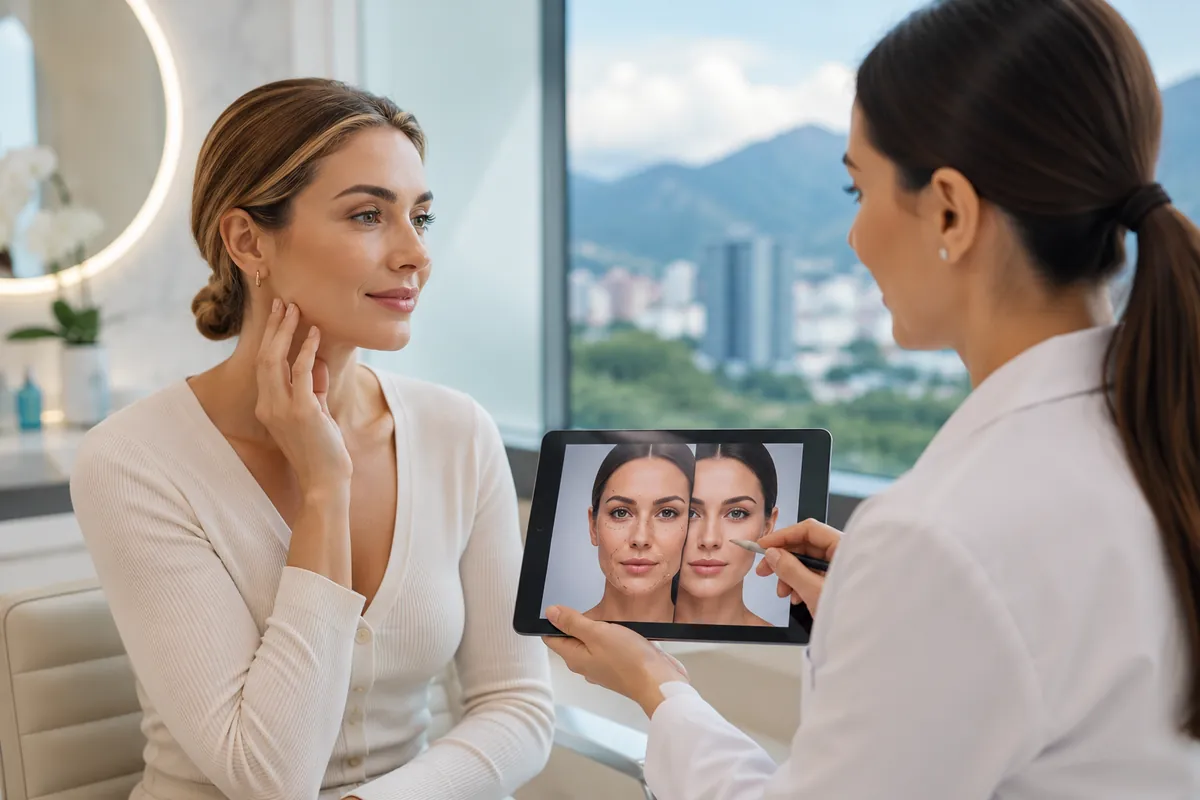
A breast augmentation in Colombia enlarges and reshapes the breasts using an FDA-approved silicone or saline implant chosen to fit your anatomy and goals. In Medellín, breast augmentation starts near $3,500 USD, versus roughly $8,000+ in the U.S. It is real surgery, so it should be performed by an SCCP board-certified plastic surgeon in an accredited operating room with a dedicated anesthesiologist. A typical stay is 5–7 days, with no flying for about 5–7 days. Implants are not lifetime devices — a future revision is likely eventually. Surgeon choice matters more than price.
In Colombia
$3,500
USD from
In the U.S.
$8,000
USD average
Your saving
56%
less
What a breast augmentation actually is
A breast augmentation — technically an augmentation mammoplasty — enlarges and reshapes the breasts by placing an implant behind the natural breast tissue. It is one of the most established procedures in plastic surgery, but "getting implants" is really a series of decisions your SCCP board-certified plastic surgeon makes with you: the type of implant, its size and profile, where the pocket sits relative to the muscle, and where the incision is placed. Each of those choices shapes the final look, feel and scar, which is why a good consultation matters as much as the operation itself.
Silicone versus saline. Most patients today choose silicone gel implants because they tend to look and feel more like natural breast tissue, with less visible rippling. Saline implants — a silicone shell filled with sterile salt water — are a valid alternative: they can be placed through a smaller incision and, if they leak, the body simply absorbs the harmless saline and the deflation is obvious. Modern "gummy bear" (highly cohesive, form-stable) silicone implants hold their shape well. There is no universally "best" implant; the right one depends on your tissue, your frame and your goals, and your surgeon will explain the trade-offs honestly rather than push a single product.
Size and profile. Size is chosen in relation to your chest width and existing tissue, not just a cup-size wish — an implant that is too large for your frame stretches tissue, looks unnatural and ages poorly. Profile describes how far the implant projects forward for a given base width (low, moderate, high), and it is how two people with different chests can each get a balanced result. Many surgeons use sizers or 3D imaging so you can preview proportions. The most reliable outcomes come from choosing a size that suits your anatomy, not the largest one possible.
Over or under the muscle. The implant pocket can sit over the muscle (subglandular) or partly under the pectoral muscle (submuscular / dual-plane). Submuscular placement usually gives a more natural upper-slope, lowers the risk of visible rippling in thin patients, and can make mammograms easier to read; subglandular placement can suit patients with more of their own tissue. Your surgeon recommends a plane based on your body, not a fixed house style.
Incisions. The most common incision is the inframammary fold under the breast, which hides well and gives the surgeon precise control; alternatives include a peri-areolar incision at the edge of the areola or, less commonly, a trans-axillary (armpit) approach. Each has trade-offs in scar visibility and access, and the choice is made with you.
- Silicone or saline — feel, rippling and incision size differ; both are FDA-approved.
- Size & profile — matched to your frame, not a cup-size wish.
- Over vs under muscle — chosen for a natural result and your tissue.
- Incision — usually the inframammary fold; alternatives exist.
When you also need a lift — augmentation with mastopexy
Implants add volume, but they do not, on their own, cure sag. If your breasts have descended — commonly after pregnancy, breastfeeding or weight loss — placing an implant alone can look bottom-heavy or simply fail to lift the nipple to a youthful position. In that situation the honest recommendation is a breast lift combined with augmentation (augmentation-mastopexy): the lift removes excess skin and raises the breast and nipple, while the implant restores fullness, especially in the upper pole.
The simple test many surgeons use is where the nipple sits relative to the fold beneath the breast. If it has dropped to or below that fold, a lift is usually needed for a good result, and adding an implant without one tends to disappoint. The trade-off is honest and worth understanding: a lift adds scars (around the areola, and often a vertical line down to the fold) in exchange for a genuinely better shape and position. For most patients that trade is well worth it, but it is a decision your surgeon will make with you after examining your tissue — not something to decide from a photo.
Augmentation-mastopexy is also a cornerstone of post-pregnancy restoration. Many patients pursue it as part of a wider mommy makeover, where breast and abdominal changes are addressed together in a safely sequenced plan. Whether a lift is needed at all, and how much, is exactly the kind of question a proper in-person or photo-based assessment answers — and where an ethical surgeon will tell you plainly if implants alone are the wrong tool for your goals.
Why choose HealthBridge
What's included and why it matters
A breast augmentation is only as safe as the surgeon, the implant, the anesthesia and the operating room behind it. Here is what a HealthBridge program is built around — and why each part is non-negotiable.
SCCP board-certified surgeons
Your procedure is performed by an experienced plastic surgeon certified by Colombia's SCCP — credentialed, high-volume, and held to real standards. We do not book uncertified operators to shave the price.
FDA-approved implants
Only implants from established, FDA-approved manufacturers are used, and you receive documentation of the exact device placed — brand, type and serial details — to keep for your records and future care.
Dedicated anesthesiologist, every case
A separate anesthesiologist is present for the entire operation to manage your anesthesia and monitor your vitals — never the surgeon doubling up. This is a core safety standard, not an upsell.
Accredited operating rooms
Surgery is done in a properly accredited, equipped OR — not a back-room clinic. When a price sits far below the Colombian range, it usually means this corner was cut.
Bilingual, end-to-end coordination
One accountable coordinator, in English or Spanish, from your first message through recovery — led by medical director Dra. Olga González, with airport transfers and post-op checks handled.
Honest, itemized USD pricing
You receive a clear, itemized quote in USD after a proper surgeon review, with what's included and excluded spelled out — no bait pricing and no surprises after you land.
The fat-transfer alternative, briefly
Not everyone who wants fuller breasts wants an implant, and there is a device-free alternative worth knowing about: breast augmentation by fat transfer. Here the surgeon harvests fat by liposuction from an area where you have surplus — the abdomen, flanks or thighs — purifies it, and injects it into the breasts, a natural pairing with body contouring. It uses your own tissue, adds no foreign device and can subtly improve contour at the donor site at the same time.
The honest limits matter, though. Fat transfer delivers a modest increase — typically a partial cup size or so per session, not a dramatic enlargement — some of the grafted fat is naturally reabsorbed, and results depend on having enough donor fat and stable weight. It suits patients wanting a natural, understated boost or refinement rather than a significant size change. For a larger, more predictable and controllable increase, implants remain the standard. A surgeon can tell you honestly which approach fits your goals, and the same fat-transfer principle underpins procedures like a BBL.
Why patients choose Colombia — and Medellín specifically
The cost difference is the headline, and it is real. A breast augmentation that commonly runs $8,000 or more at a reputable U.S. practice frequently starts near $3,500 USD in Medellín, and an augmentation-mastopexy that might reach $12,000–$15,000 in the States is a fraction of that here. Crucially, that gap comes from the lower cost of operating in Colombia — overhead, staffing, facility costs — not from a cheaper surgeon, an off-brand implant or a corner-cut operating room. The savings are in the economics, not in safety. When a price sits far below even the Colombian range, that is a warning sign, not a bargain.
But money alone is not why Medellín has become a genuine plastic-surgery hub. Colombia has a long, serious tradition in aesthetic surgery, and its SCCP (Sociedad Colombiana de Cirugía Plástica) board-certified surgeons are experienced, high-volume and internationally regarded. The city itself makes recovery unusually comfortable: a spring-like climate year-round, the walkable, hotel-rich El Poblado district, and direct flights from Miami, Fort Lauderdale, New York, Houston and Panama City that put it a short hop from the U.S. and Central America.
What sets HealthBridge apart is that we treat this as medical care, not a shopping trip. Many "package" operators abroad are sales machines that funnel patients to whoever is cheapest that week. Here, our medical director Dra. Olga González personally coordinates your care — vetting the surgeon match, confirming the facility is accredited, and staying reachable in English or Spanish from your first message through your recovery. You get a named, accountable coordinator rather than a call center.
- Meaningful, honest savings — lower overhead, not lower standards.
- SCCP board-certified surgeons — experienced, credentialed, high-volume.
- Comfortable recovery base — spring-like Medellín, El Poblado, easy direct flights.
- One accountable coordinator — Dra. Olga González, bilingual, end to end.
Options
Breast augmentation options
- Silicone gel implants
- The most popular choice: a cohesive silicone gel implant that tends to look and feel like natural breast tissue with less visible rippling. Modern form-stable ('gummy bear') options hold their shape well. FDA-approved and followed with periodic imaging.
- Saline implants
- A silicone shell filled with sterile salt water — placeable through a smaller incision, and if it leaks the body harmlessly absorbs the saline with an obvious deflation. A sound, FDA-approved alternative for the right patient and goals.
- Augmentation with lift (mastopexy)
- When breasts have sagged after pregnancy, breastfeeding or weight loss, an implant is combined with a lift to remove excess skin and raise the breast and nipple. Adds scars in exchange for a genuinely better shape and position.
- Fat-transfer augmentation
- A device-free option using your own liposuctioned fat for a modest, natural increase — typically a partial cup size per session, since some fat is reabsorbed. Best for subtle enhancement; implants remain the standard for larger, more predictable results.
The honest safety conversation
Breast augmentation is one of the most-studied procedures in surgery, and for a healthy patient with a qualified surgeon it has a strong safety record — but "safe" does not mean "risk-free," and being straight about the risks is part of responsible care. As with any operation there are general risks of anesthesia, bleeding and infection, which is why we insist on an accredited operating room and a dedicated anesthesiologist present for the entire case. There are also implant-specific considerations worth understanding before you decide.
Common, manageable issues. The most frequent implant-related concern is capsular contracture — the scar capsule that naturally forms around any implant tightening and hardening the breast; it is treatable, sometimes with revision surgery. Implants can also rupture or leak over time (a silent event with cohesive silicone, an obvious deflation with saline), and there can be changes in nipple or breast sensation, asymmetry, or the need for size adjustment. None of these are reasons to avoid surgery, but you should go in knowing they are possibilities, not guarantees against them.
BIA-ALCL — addressed responsibly. You may read about BIA-ALCL (breast implant-associated anaplastic large cell lymphoma), a rare cancer of the immune system that has been associated specifically with certain textured implants, not with breast tissue itself. It is uncommon, it is generally treatable when caught early (often by removing the implant and surrounding capsule), and awareness has led surgeons to favor smooth-surface implants. Some patients also report a collection of symptoms informally called "breast implant illness," which is under active study. We mention these plainly not to alarm you but because informed consent means hearing the real picture — your surgeon will discuss current evidence, implant surface, and monitoring so your decision is a genuinely informed one.
Reputable implants and monitoring. Our surgeons use FDA-approved implants from established manufacturers, and you should receive documentation of the exact device placed — brand, type and serial details — to keep for your records. Ongoing monitoring matters: silicone implants are followed over time (imaging such as ultrasound or MRI may be advised at intervals), and any new lump, pain, swelling or shape change should be checked. HealthBridge is a facilitator, not the operating clinic, and our role is to make sure you are matched to a surgeon and facility that hold to these standards — read more in our plastic surgery in Colombia overview.
Am I a good candidate? Setting realistic expectations
A good candidate for breast augmentation is in generally good health, at or near a stable weight, a non-smoker (or willing to stop well in advance, since nicotine impairs healing and raises complication risk), has fully developed breasts, and — just as important — holds realistic expectations. Surgery can enlarge, reshape and improve symmetry and proportion; it works best for someone who wants a natural, balanced improvement to their own frame rather than a specific celebrity outcome.
Realistic expectations are worth dwelling on, because they are the biggest driver of satisfaction. Implants add volume but cannot fully correct significant sagging without a lift, they cannot make two naturally different breasts perfectly identical (some asymmetry is normal and expected), and the largest sizes are not the safest or the most natural-looking. A responsible surgeon steers you toward a size and plan that suit your body and last well, and will explain why chasing extremes tends to age poorly and invite complications. Wanting a subtle, proportionate result is not a compromise — it is usually the smart choice.
Timing and life plans matter too. Many patients prefer to complete pregnancy and breastfeeding before augmentation, since those can change breast shape and volume; augmentation does not generally prevent future breastfeeding, but it is a reasonable point to discuss. Certain conditions — significant heart or clotting disorders, uncontrolled diabetes, active infection, or unaddressed breast findings that need evaluation first — can make surgery inadvisable until resolved. Ultimately, candidacy is a medical decision made by the operating surgeon after reviewing your history, measurements and goals, and sometimes the responsible answer is "not yet," "a lift as well," or "a smaller size." That is good care, not an obstacle.
Pricing
How much it costs in Colombia
| Option | In Colombia | In the U.S. |
|---|---|---|
| Breast augmentation (silicone implants) | from ~$3,500 USD | ~$8,000+ USD |
| Breast augmentation (saline implants) | individualized quote | $7,000–$9,000+ USD |
| Augmentation with lift (mastopexy) | individualized quote | $12,000–$15,000+ USD |
| Fat-transfer breast augmentation | quoted after assessment | $6,000–$11,000+ USD |
| Implant revision / replacement | quoted after assessment | $8,000–$14,000+ USD |
Reference 'from' prices in USD, subject to medical assessment.
Full breakdown, by area and by technique, in our guide to breast augmentation cost in Colombia.
At a glance
Breast augmentation: Colombia vs the United States
| Colombia (HealthBridge) | United States | |
|---|---|---|
| Augmentation (from) | ~$3,500 USD | ~$8,000+ USD |
| Augmentation + lift | significantly lower | $12,000–$15,000+ USD |
| Surgeon | SCCP board-certified, high-volume | Board-certified, at premium pricing |
| Implants | FDA-approved silicone or saline | FDA-approved silicone or saline |
| Wait time | Days–weeks | Weeks–months |
| Recovery setting | Spring-like Medellín, concierge, 5–7 days | At home |
Recovery — what the first weeks really look like
Recovery from breast augmentation is very manageable for most patients, but it is still real surgery and being honest about the timeline prevents disappointment. In the first days you can expect soreness, tightness, swelling and a feeling of pressure across the chest — often described as heaviness rather than sharp pain — controlled with prescribed medication. You will wear a supportive surgical bra that holds the implants in position and helps control swelling, typically for several weeks, and you will be asked to limit lifting and vigorous arm movement early on.
Most patients feel notably better within the first week and can manage light daily activities, though anything strenuous — heavy lifting, chest exercise, running — is off-limits for several weeks (commonly around four to six) until your surgeon clears it. If a lift was part of your procedure, recovery is a little more involved and scars need careful aftercare. Swelling settles gradually, and the implants themselves take time to "drop and fluff" — sitting high and firm at first before softening and settling into a more natural position over the following weeks to a few months.
Timing is why the stay is what it is. We recommend a stay of 5 to 7 days in Medellín so your surgeon can perform post-operative checks, confirm healing is on track and address any early concern before you travel. Because a long flight and clotting risk are considerations, no flying for roughly 5 to 7 days is standard — your surgeon clears you before you go home. Plan for about a week to two off desk-type work, and follow your specific activity and scar-care instructions closely; the discipline of the first weeks protects your result.
Longevity — implants are not lifetime devices
This is the single most important expectation to set honestly, because it is where marketing so often misleads: breast implants are not lifetime devices. They are excellent, durable medical devices, and many last a long time, but they do not last forever, and it is realistic to expect that you will need a revision or replacement at some point in your life — sometimes because of a problem like rupture or capsular contracture, sometimes simply because you want a change after many years. Anyone who promises "one and done, forever" is not being straight with you.
There is no universal expiry date. Some patients go a decade or two without any issue; others need attention sooner. What triggers a future operation is usually one of a handful of things: a rupture or leak, capsular contracture, a shift in position or shape over the years, or your own changing preferences as your body and taste evolve. This is normal and expected across the whole field of breast augmentation — not a sign that something went wrong with your surgery.
Two practical implications follow. First, ongoing monitoring is part of having implants: keep the documentation of your specific device, follow any imaging schedule your surgeon recommends for silicone implants, and get any new lump, pain or shape change checked. Second, factor a possible future revision into your long-term thinking, including cost. The good news is that the same board-certified surgeons and accredited facilities in Medellín handle revision and implant exchange, so a future adjustment can be planned calmly rather than feared. We would rather you understand this clearly now than be surprised years later.
Planning your trip and what's included
Planning a surgical trip abroad sounds daunting, but the point of a facilitator is that one team handles the logistics so you can focus on healing. It starts with a free, no-obligation assessment: you send your goals, a short medical history and clear photos by WhatsApp, and Dra. González's team reviews your case, matches you with an appropriate SCCP board-certified surgeon, and returns an itemized quote in USD. Because implant choice, size and whether a lift is needed are individual, the final price and plan follow the surgeon's review — not a fixed wall price.
A typical breast augmentation program with HealthBridge includes the surgeon's fee, the FDA-approved implants, the accredited operating-room and facility costs, the dedicated anesthesiologist, standard pre-operative labs, your post-operative surgical bra, and follow-up checks during your stay, along with airport transfers and bilingual coordination throughout. We are equally clear about what is not included — international flights, your hotel, and any optional add-ons — so there are no surprises after you land.
- Free assessment. Share goals, history and photos by WhatsApp; receive honest guidance and an itemized USD quote.
- Schedule & travel. Fly into Medellín's MDE airport — direct from Miami, Fort Lauderdale, New York, Houston and Panama City. We arrange transfers and help with a nearby hotel.
- Surgery & stay. Your operation is performed in an accredited OR; plan for 5–7 days in Medellín for checks and safe early recovery.
- Fly-home clearance. No flying for about 5–7 days — your surgeon clears you before you travel, and we stay reachable afterward.
Throughout, our promise is not a magazine-cover body — it is a safe, board-certified procedure, an honest plan, and a named coordinator who stays with you. To go deeper before you decide, start with our plastic surgery in Colombia overview and, if post-pregnancy changes are your concern, our mommy makeover guide, then reach out from our medical tourism home page for a free assessment.
Meet your coordinator — Dra. Olga González
For a procedure where trust and safety matter as much as aesthetics, it helps that a named, accountable physician oversees your journey rather than an anonymous booking desk. Dra. Olga González is HealthBridge's medical director and the person who personally coordinates your breast augmentation — reviewing your case, matching you to a suitable SCCP board-certified plastic surgeon, confirming the facility is accredited, and staying reachable in English or Spanish from your first message through your recovery.
To be clear about roles: Dra. González does not perform your surgery. The operation is carried out by an experienced, board-certified plastic surgeon, with a dedicated anesthesiologist present for the whole case. Her job as medical director is to make sure you are matched to the right surgeon for your anatomy and goals, that the setting meets real safety standards, and that you understand honestly what breast augmentation can and cannot do — including that implants are not lifetime devices — before anything is scheduled.
That posture — care over sales — is the whole point of using a facilitator like HealthBridge. You are not funneled to whoever is cheapest; you are guided by someone whose interest is a safe, well-matched outcome, and who will tell you plainly if you need a lift as well, a different size, or to wait. When you travel to Medellín with us, you correspond with one bilingual team, you know who your surgeon is before you fly, and you leave with follow-up guidance you can share with your doctor at home. To begin, reach out from our home page for a free, no-obligation assessment.
How it works
Your medical journey, step by step
Part of our Plastic Surgery & Aesthetic Medicine program.
Free assessment & quote
Message us on WhatsApp with your case, records or photos. We review it and send a plan and quote in USD before you book a flight — at no cost.
Travel plan
We coordinate a board-certified specialist, accredited hospital, dates, accommodation and airport transfers in Medellín.
Procedure
You're treated by board-certified specialists in accredited facilities, with bilingual support at every step.
Recovery & follow-up
You recover in Medellín with included check-ups and WhatsApp follow-up once you're home.
Your trusted physician
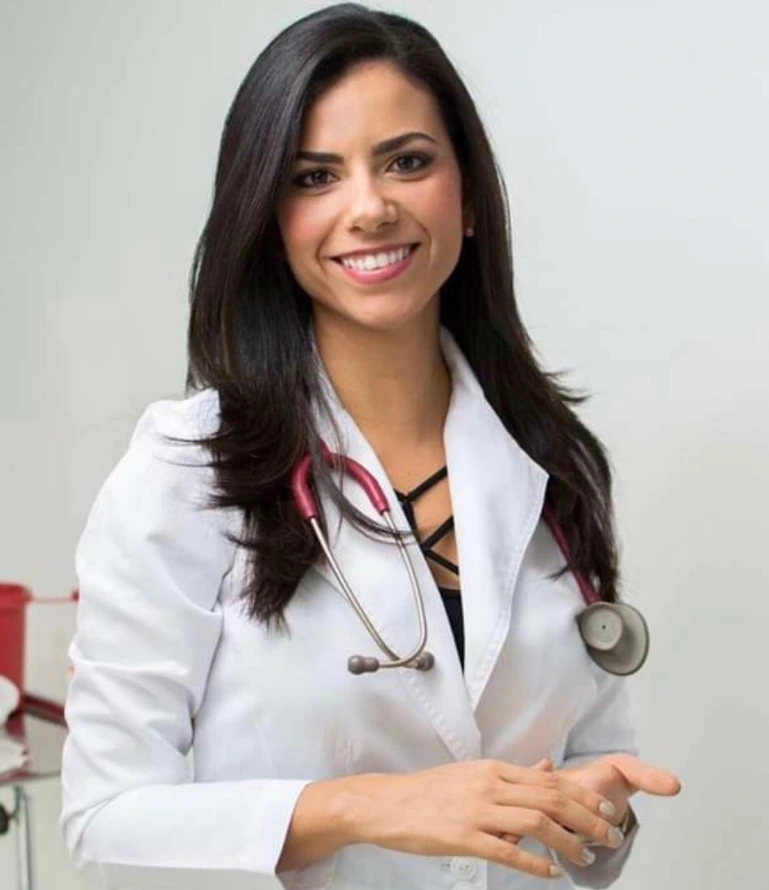
Dra. Olga González
Medical Director
Aesthetic Medicine Physician · Longevity & Regenerative Medicine · Health Coach in Nutrition · Universidad de San Martín
Dra. Olga González is the medical director of HealthBridge Medical Tourism. A physician trained at Universidad de San Martín and certified in aesthetic medicine, she has built her practice in El Poblado, Medellín, around longevity, regenerative medicine and biohacking. She personally coordinates each international patient's care — vetting surgeons, accredited hospitals and recovery plans — so that every traveler is treated by board-certified specialists and supported in their own language from the first message to the final follow-up.
- Aesthetic Medicine
- Regenerative & Longevity Medicine
- Biohacking
- Clinical Nutrition
Frequently asked questions
How much does a breast augmentation cost in Colombia?
Silicone or saline — which implant is better?
Should the implant go over or under the muscle?
Do I also need a breast lift?
Are breast implants safe?
What is BIA-ALCL?
Do breast implants last forever?
How long do I need to stay in Medellín?
What is recovery like?
Can I breastfeed after a breast augmentation?
Can I get bigger breasts without implants?
Does HealthBridge perform the surgery?
You may also consider
Other procedures in this specialty
Many patients combine procedures in a single trip. These are the ones we coordinate within the same specialty.
BBL in Colombia
from $3,800 USD · stay 7–12 days
Mommy Makeover in Colombia
from $6,500 USD · stay 10–14 days
Liposuction in Colombia from $3,500
from $3,500 USD · stay 7–10 days
Rhinoplasty in Colombia
from $4,000 USD · stay 7–10 days
Tummy Tuck in Colombia
from $4,000 USD · stay 7–10 days
Plastic Surgery in Medellín from $3,500
from $3,500 USD · stay 7–14 days
Botox in Colombia
from $180 USD · stay 1–3 days
Dermal Fillers in Colombia
from $320 USD · stay 1–3 days
Biostimulators in Colombia: Cost from $450 per Vial
from $450 USD · stay 1–3 days
Medical references
What this page is based on
For each source we state which claim it supports, with a direct link, so you can check it yourself.
-
U.S. Food and Drug Administration — Risks and Complications of Breast Implants
Backs the three things we refuse to soften. The FDA states that breast implants "are not considered lifetime devices" and that the longer a person has them the greater the chance of complications; that some complications require more surgery, with no guarantee of a satisfactory cosmetic outcome from a reoperation; and it names capsular contracture, rupture and breast implant-associated anaplastic large cell lymphoma (BIA-ALCL).
Prices, length of stay and package contents are HealthBridge's own figures and do not come from these sources. The U.S. price we compare against comes from our own price study, where every figure is traced to a named U.S. clinic. None of these organizations is affiliated with or endorses HealthBridge.
Sources
Where to verify this information
We're not asking you to take our word for it. These are independent medical bodies whose guidance you can read directly before making any decision.
- American Society of Plastic Surgeons — patient safety resources
- CDC Yellow Book — Medical Tourism: risks, planning and post-travel care
- MedlinePlus (U.S. National Library of Medicine) — patient health information
HealthBridge is not affiliated with or endorsed by these organizations. They are cited as independent reference.
Other specialties
Explore more treatments in Colombia

Ready to take the first step?
Send us your case on WhatsApp and get a personalized plan and quote — free, with no obligation.
El Poblado, Medellín · Mon–Fri 8:00 AM – 6:00 PM · Sat 9:00 AM – 1:00 PM (COT)