
Plastic surgery · Medellín, Colombia
Tummy Tuck in Colombia — Abdominoplasty in Medellín
A board-certified tummy tuck (abdominoplasty) in Medellín with SCCP plastic surgeons, an accredited operating room, and a dedicated anesthesiologist for every case — from about $4,000 USD, with a typical stay of 7–10 days. Coordinated end to end by our medical director, Dra. Olga González.
- SCCP board-certified surgeons
- Muscle repair (diastasis)
- From ~$4,000 USD
- Dedicated anesthesiologist
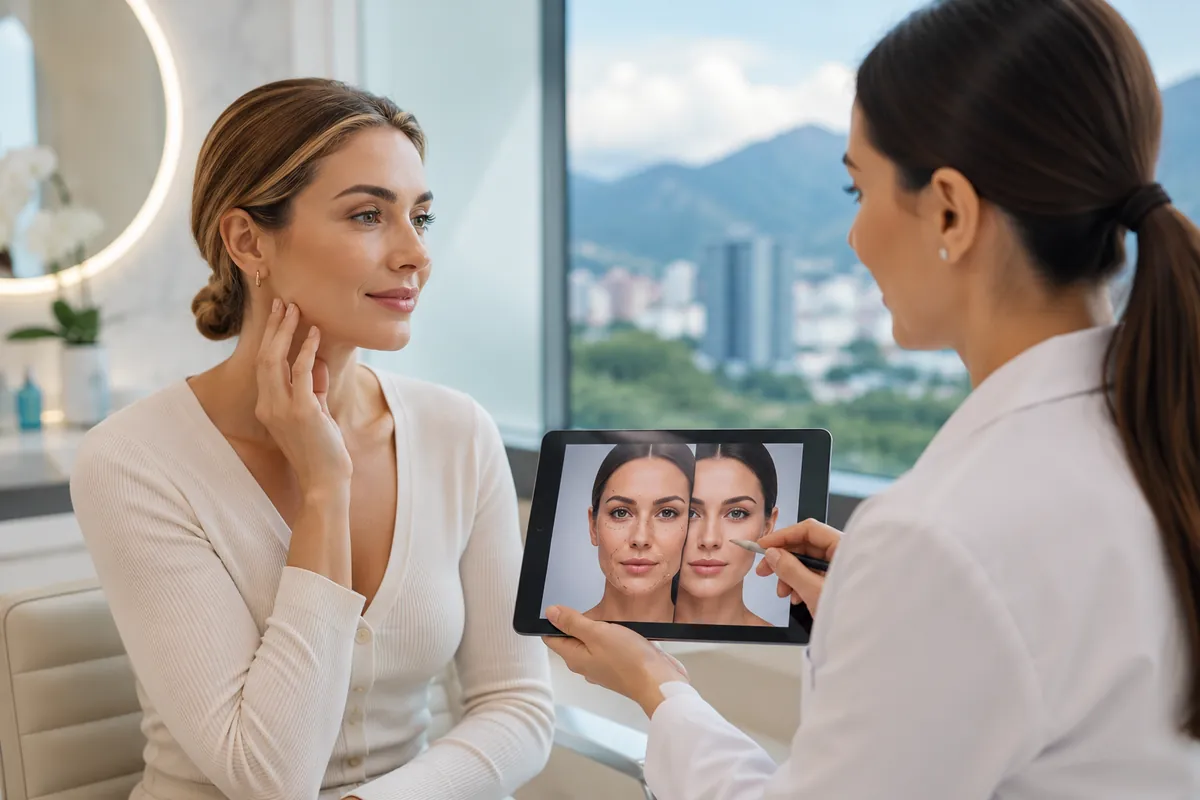
A tummy tuck (abdominoplasty) in Colombia removes excess loose skin from the abdomen, repairs separated abdominal muscles (diastasis recti), and flattens the midsection — a body-contouring result that diet and exercise cannot achieve on their own. In Medellín, a full tummy tuck starts near $4,000 USD, versus roughly $11,000+ in the U.S. It is major surgery performed by an SCCP board-certified plastic surgeon in an accredited operating room, with a dedicated anesthesiologist. A typical stay is 7–10 days, it leaves a permanent lower-abdominal scar, and it works best for stable-weight patients who are done having children.
In Colombia
$4,000
USD from
In the U.S.
$11,000
USD average
Your saving
64%
less
What a tummy tuck (abdominoplasty) actually is
A tummy tuck, known medically as an abdominoplasty, is a body-contouring operation that does three related things at once: it removes excess loose or hanging skin from the abdomen, it repairs the abdominal muscles when they have stretched apart, and it flattens and firms the midsection that is left. Performed by an SCCP board-certified plastic surgeon, it addresses a specific problem that diet and exercise genuinely cannot fix — because no amount of core training will tighten skin that has lost its elasticity or pull separated muscle back together.
The muscle part is what many patients do not realize they need. After pregnancy or significant weight change, the two vertical bands of abdominal muscle (the rectus abdominis) can separate down the midline, a condition called diastasis recti. That separation is why some people have a persistent lower-belly bulge no matter how lean they get. A full tummy tuck stitches those muscles back together like an internal corset, which is what restores a flat profile and, for many, relieves the "pooch" that crunches never touch.
It is important to be honest about what a tummy tuck is and is not. It is major surgery done under general anesthesia, with a real recovery and a permanent scar low across the abdomen. It is not a weight-loss procedure and not a substitute for one — the goal is to remove redundant skin and tighten the wall, not to shed pounds. Understood correctly, it is one of the most satisfying operations in plastic surgery for the right candidate; understood as a shortcut to weight loss, it disappoints.
- Removes excess skin — the loose apron of tissue diet cannot tighten.
- Repairs diastasis recti — separated muscles stitched back together.
- Flattens the abdomen — restores a firm, contoured midsection.
- Is real surgery — general anesthesia, genuine recovery, a permanent scar.
Full vs mini vs extended — choosing the right operation
"Tummy tuck" is really a family of operations, and matching the right one to your anatomy is the single most important planning decision. The choice depends on how much loose skin you have, whether it sits above or only below the belly button, and whether your abdominal muscles are separated. An honest surgeon will steer you to the correct procedure — not the biggest or the smallest, but the one that fits.
A full abdominoplasty is the standard operation and what most people picture. It treats the entire abdomen above and below the navel, repairs muscle separation along the whole midline, removes skin from hip to hip, and repositions the belly button. It is the right choice for classic post-pregnancy or post-weight-loss laxity where skin and muscle are affected across the whole abdomen.
A mini tummy tuck is a smaller operation for a smaller problem: a modest amount of loose skin confined to the area below the belly button, with little or no upper-abdominal excess. The incision is shorter, the belly button is usually left alone, and recovery is generally quicker. Its limitation matters — a mini does nothing for the upper abdomen or for muscle separation above the navel, so it is wrong for anyone with more widespread laxity, however appealing the shorter scar sounds.
An extended tummy tuck (and its relatives, the fleur-de-lis and the circumferential body lift) is for the other end of the spectrum: patients after massive weight loss who carry excess skin not only in front but around the flanks and lower back, or vertically as well as horizontally. The incision is longer to remove that additional tissue. It is a bigger operation with a longer scar, chosen only when the amount of excess skin genuinely requires it.
- Full — whole abdomen, full muscle repair, belly button moved. The standard.
- Mini — lower abdomen only, shorter scar. Small, isolated laxity.
- Extended / fleur-de-lis — massive weight loss, skin around the sides or vertical excess.
Why choose HealthBridge
What's included and why it matters
A tummy tuck is only as safe as the surgeon, the anesthesia and the operating room behind it. Here is what a HealthBridge tummy tuck program is built around — and why each part is non-negotiable.
SCCP board-certified surgeons
Your procedure is performed by an experienced plastic surgeon certified by Colombia's SCCP — credentialed, high-volume, and held to real standards. We do not book uncertified operators to shave the price.
Dedicated anesthesiologist, every case
A separate anesthesiologist is present for the entire operation to manage your general anesthesia and monitor your vitals — never the surgeon doubling up. This is a core safety standard, not an upsell.
Accredited operating rooms
Surgery is done in a properly accredited, equipped OR — not a back-room clinic. When a price sits far below the Colombian range, it usually means this corner was cut.
Real muscle repair (diastasis)
A full tummy tuck includes stitching the separated abdominal muscles back together — the step that truly flattens the midsection — not just trimming skin. Your surgeon confirms what your anatomy needs.
Bilingual, end-to-end coordination
One accountable coordinator, in English or Spanish, from your first message through recovery — led by medical director Dra. Olga González, with airport transfers, drain management and post-op checks handled.
Honest, itemized USD pricing
You receive a clear, itemized quote in USD after a proper surgeon review, with what's included and excluded spelled out — no bait pricing and no surprises after you land.
Tummy tuck vs liposuction — and when they are combined
One of the most common and most consequential mix-ups is confusing a tummy tuck with liposuction. They solve different problems, and choosing the wrong one leads to disappointment. Liposuction removes fat; it does nothing for loose skin or separated muscle. If you have good skin tone and firm muscles but a stubborn fat deposit, liposuction alone may be perfect. But if your skin is loose or your muscles have separated after pregnancy, liposuction will remove the fat and leave the skin hanging — sometimes making laxity look worse.
A tummy tuck removes skin and repairs muscle; on its own it is not primarily a fat-removal operation. That is precisely why the two are so often combined. A tummy tuck with liposuction of the flanks and waist — sometimes marketed as "lipoabdominoplasty" — lets the surgeon flatten the front with the abdominoplasty while sculpting the sides for a more complete contour in a single operation. When done thoughtfully, the combination produces a result neither procedure achieves alone.
The combination has to be done carefully, though, because aggressive liposuction of the same skin flap that is being lifted can compromise its blood supply and healing. This is another reason surgeon experience matters: knowing how much liposuction can be safely combined with the skin undermining of a tummy tuck is a judgment call that separates good outcomes from complications. Our surgeons make that call conservatively, prioritizing safe healing over squeezing in extra contouring.
The honest guidance is simple: the right procedure is decided by your anatomy, not by what you ask for. If you mainly have fat, you may need liposuction. If you mainly have loose skin and muscle separation, you need a tummy tuck. If you have both, a combined approach may be best — and a good surgeon will tell you which, even if it is not what you expected.
Why patients choose Colombia — and Medellín specifically
The cost difference is the headline, and it is real. A tummy tuck that commonly runs $11,000 or more at a reputable U.S. practice frequently starts near $4,000 USD in Medellín — and a combined tummy tuck with liposuction that might reach $15,000 or more in the States is a fraction of that here. Crucially, that gap comes from the lower cost of operating in Colombia, not from a cheaper surgeon or a corner-cut operating room. The savings are in overhead, not in safety — and a price far below even the Colombian range is a warning sign, not a bargain.
But money alone is not why Medellín has become a genuine plastic-surgery hub. Colombia has a long, serious tradition in aesthetic surgery, and its SCCP (Sociedad Colombiana de Cirugía Plástica) board-certified surgeons are experienced, high-volume, and internationally regarded. The city itself makes recovery unusually comfortable: a spring-like climate year-round, the walkable, hotel-rich El Poblado district, and direct flights from Miami, Fort Lauderdale, New York, Houston and Panama City that put it a short hop from the U.S. and Central America.
What sets HealthBridge apart is that we treat this as medical care, not a shopping trip. Many "surgery package" operators abroad are sales machines that funnel patients to whoever is cheapest that week. Here, our medical director Dra. Olga González personally coordinates your care — vetting the surgeon match, confirming the facility is accredited, and staying reachable in English or Spanish from your first message through your recovery. You get a named, accountable coordinator rather than a call center.
- Meaningful, honest savings — lower overhead, not lower standards.
- SCCP board-certified surgeons — experienced, credentialed, high-volume.
- Comfortable recovery base — spring-like Medellín, El Poblado, easy direct flights.
- One accountable coordinator — Dra. Olga González, bilingual, end to end.
Options
Tummy tuck options and related procedures
- Full abdominoplasty
- The standard operation: treats the whole abdomen above and below the navel, repairs muscle separation along the full midline, removes skin hip to hip, and repositions the belly button. Best for classic post-pregnancy or post-weight-loss laxity.
- Mini tummy tuck
- A smaller operation for a smaller problem — loose skin confined below the belly button, with a shorter scar and generally quicker recovery. It does not treat the upper abdomen or muscle separation above the navel, so it suits only isolated lower laxity.
- Extended / fleur-de-lis tummy tuck
- For patients after massive weight loss who carry excess skin around the flanks and lower back, or vertically as well as horizontally. The incision is longer to remove that additional tissue — a bigger operation chosen only when the amount of loose skin requires it.
- Tummy tuck + liposuction
- Combining abdominoplasty with liposuction of the flanks and waist (lipoabdominoplasty) flattens the front while sculpting the sides for a more complete contour in one operation. The amount of combined liposuction is kept conservative to protect healing of the skin flap.
Safety — because a tummy tuck is major surgery
A tummy tuck is a rewarding operation, but it is also one of the more extensive procedures in body contouring, and it deserves a frank safety conversation rather than reassurance. It is done under general anesthesia, it involves lifting a large area of skin and repairing the muscle wall, and — like all major surgery — it carries real risks: bleeding, infection, poor wound healing, fluid collection (seroma), and, most seriously, blood clots (deep vein thrombosis and pulmonary embolism). None of this should frighten you off, but you should choose your surgeon and setting as if these risks are real, because they are.
Risk is reduced far more by the surgeon and the facility than by anything else. A responsible tummy tuck is performed in an accredited operating room — not a back-room clinic — with a dedicated anesthesiologist present for the entire case, never the surgeon doubling as the person watching your vitals. Clot prevention matters especially here: early walking, compression, appropriate positioning and, when indicated, blood-thinning measures. These are the standards our SCCP board-certified surgeons work to, and they are not negotiable.
Certain factors raise risk and must be handled honestly. Smoking dramatically impairs healing of the skin flap and is a genuine reason a good surgeon will delay or decline surgery until you have stopped. Combining a tummy tuck with too many other procedures in one long anesthetic session increases clot and complication risk — which is why responsible surgeons limit how much is done at once, even if a patient wants everything together. Obesity, uncontrolled diabetes and certain clotting conditions also change the calculus.
Our role as a facilitator is to protect you from the trade-off between price and safety. HealthBridge does not perform surgery — we connect you with vetted, SCCP board-certified plastic surgeons operating in accredited facilities, and we will not book anyone into an under-resourced OR to hit a lower number. If a surgeon judges that surgery is unsafe for you, or that you should do less in one sitting, you will be told plainly. We would rather you arrive fully informed than merely reassured.
Am I a good candidate for a tummy tuck?
A tummy tuck is major surgery, so candidacy is a medical decision made by the surgeon — not a box everyone can tick. The clearest candidates are patients with loose abdominal skin and muscle separation after pregnancy, or after significant weight loss, whose skin no longer bounces back. If your concern is an apron of loose skin, a persistent lower-belly bulge from separated muscles, or both, a tummy tuck addresses exactly what diet and exercise cannot.
Two conditions carry unusual weight. First, you should be at or near a stable weight that you can realistically maintain — a tummy tuck contours the body you have, and major weight change afterward will alter the result. Most surgeons ask that you be close to your goal weight before surgery rather than planning to lose a lot afterward. Second, if you may have more children, most surgeons sensibly advise waiting until you are done having children, because a future pregnancy can re-stretch the skin and re-separate the muscles the operation just repaired.
Beyond that, a good candidate is in generally good health, a non-smoker (or willing to stop well in advance, since nicotine badly impairs skin-flap healing), and someone with realistic expectations — including full acceptance of a permanent scar. Certain conditions make surgery inadvisable, and an ethical surgeon will say so: significant heart or clotting disorders, uncontrolled diabetes, active infection, a BMI that is too high for safe surgery, or plans for future pregnancy in the near term.
Many patients combine a tummy tuck with other contouring, particularly after childbearing. If you are considering restoring several areas at once, our mommy makeover overview explains how a tummy tuck, breast surgery and liposuction are safely sequenced. The honest bottom line: candidacy — and how much to do in one operation — is decided by the operating surgeon after a proper review of your history, photos and goals.
Pricing
How much it costs in Colombia
| Option | In Colombia | In the U.S. |
|---|---|---|
| Full abdominoplasty (with muscle repair) | from ~$4,000 USD | ~$11,000+ USD |
| Mini tummy tuck | individualized quote | $6,000–$9,000+ USD |
| Extended / fleur-de-lis tummy tuck | quoted after assessment | $14,000–$20,000+ USD |
| Tummy tuck + liposuction (lipoabdominoplasty) | individualized quote | $15,000–$20,000+ USD |
| Mommy makeover (tummy tuck + breast) | quoted after assessment | $18,000–$25,000+ USD |
Reference 'from' prices in USD, subject to medical assessment.
Full breakdown, by area and by technique, in our guide to tummy tuck cost in Colombia.
At a glance
Tummy tuck: Colombia vs the United States
| Colombia (HealthBridge) | United States | |
|---|---|---|
| Full tummy tuck (from) | ~$4,000 USD | ~$11,000+ USD |
| Tummy tuck + liposuction | significantly lower | $15,000–$20,000+ USD |
| Surgeon | SCCP board-certified, high-volume | Board-certified, at premium pricing |
| Anesthesia | Dedicated anesthesiologist, every case | Dedicated anesthesiologist |
| Wait time | Days–weeks | Weeks–months |
| Recovery setting | Spring-like Medellín, concierge, 7–10 days | At home |
The scar and realistic expectations
Every patient deserves the plain truth about this: a full tummy tuck leaves a permanent scar. It runs low and horizontally across the lower abdomen, typically from hip to hip, and there is a small scar around the repositioned belly button. This is not a downside a good surgeon hides — it is the fundamental trade-off of the operation. You exchange loose, hanging skin for a flatter contour and a scar. For the right patient that is a very worthwhile trade, but you must go in accepting it fully.
The good news is that the scar is placed to be hidden. Surgeons position it low enough to sit beneath underwear, most swimwear and bikini lines, so it is generally not visible in clothing. Its length depends on the operation: shorter for a mini, hip-to-hip for a full, and longer for an extended or fleur-de-lis tummy tuck after massive weight loss. Where the incision can be placed is partly dictated by how much skin must be removed, which is not fully within anyone's control.
How a scar matures is also partly about you and time. Fresh scars look red or raised and then fade and flatten over roughly a year — the appearance at a few weeks is not the final result. Genetics play a large role, and some people scar more than others; those prone to thick or keloid scarring should raise it with the surgeon beforehand. Good scar care — sun protection, silicone products and following your surgeon's guidance — helps, but no surgeon can promise an invisible scar, and any who does is not being honest.
Beyond the scar, realistic expectations mean understanding the result itself. A tummy tuck produces a flatter, firmer abdomen, not a fashion-model midsection or visible abs. It will not eliminate all skin texture, it does not stop future weight change or aging, and it is not a weight-loss operation. Patients who want a natural, meaningful improvement — a flatter stomach, clothes that fit, relief from the post-pregnancy pooch — are the ones who are happiest.
Recovery — what the first weeks really look like
Recovery from a tummy tuck is real and demands genuine commitment, and being honest about it prevents most disappointment. Because the muscle wall has been repaired, you will feel tight across the abdomen and cannot stand fully upright at first — you walk slightly bent at the waist for the first several days to avoid tension on the repair and incision, gradually straightening over one to two weeks. Managed pain, soreness and significant swelling are all expected early on.
You will wear an abdominal compression garment to control swelling and support the tissues, typically for several weeks. Most full tummy tucks use surgical drains — thin tubes that clear fluid from under the skin — which are removed once daily output drops, often within the first one to two weeks; caring for them is straightforward and your team guides you. Walking gently and early is encouraged from day one, because movement is one of the best defenses against blood clots, even while you avoid any strain on the core.
Timing is why the stay is what it is. We recommend a stay of 7 to 10 days in Medellín so your surgeon can see you for post-operative checks, manage or remove drains, and confirm you are healing well and past the riskiest early window before you travel. Because sitting for a long flight and clotting risk are both concerns, no flying for roughly 7 to 10 days is standard — your surgeon clears you before you go home.
The longer arc matters too. Most people take about two to three weeks off desk-type work and normal daily activity, and avoid heavy lifting and strenuous exercise — especially core work — for around six weeks to let the muscle repair heal fully. Swelling comes down gradually and can persist for months; numbness across the lower abdomen is common early and usually improves. The abdomen you see at two weeks is not your outcome — patience through the swelling is part of the process.
Results and longevity — how long a tummy tuck lasts
One of the most reassuring things about a tummy tuck is that its results are long-lasting — often described as permanent in the sense that the skin removed is gone for good and the muscle repair is a durable reconstruction of the abdominal wall. Unlike volume procedures where fat can be reabsorbed, a tummy tuck removes tissue and tightens structure, so the flatter contour it creates is meant to endure for many years.
"Long-lasting" is not the same as "immune to change," and honesty matters here. The result can be undone by two things above all: significant weight gain and future pregnancy. Major weight fluctuation can stretch the skin and abdominal wall again, and a pregnancy after a tummy tuck can re-separate the repaired muscles and re-stretch the skin — which is exactly why surgeons advise waiting until you are done having children. Barring those, the improvement holds up very well.
Protecting your result is largely within your control. Maintaining a stable weight through steady nutrition and activity is the single best way to keep the contour you paid for; core-strengthening exercise, once you are fully healed and cleared, supports the muscle repair. Natural aging and gravity continue over the years, as they do for everyone, but a well-executed tummy tuck in a weight-stable patient typically keeps a flat, firm profile for a long time.
It also helps to compare against alternatives. There is no non-surgical treatment that removes a significant amount of loose skin or repairs separated muscle — creams, massage and energy devices cannot do it. That is why, for the right candidate, a tummy tuck's durability is a large part of its appeal: it addresses a structural problem structurally, once, rather than temporarily.
Planning your trip and what's included
Planning a surgical trip abroad sounds daunting, but the point of a facilitator is that one team handles the logistics so you can focus on healing. It starts with a free, no-obligation assessment: you send your goals, a short medical history, and clear photos by WhatsApp, and Dra. González's team reviews your case, matches you with an appropriate SCCP board-certified surgeon, and returns an itemized quote in USD. Because a tummy tuck is individualized — full, mini or extended, with or without liposuction — the final price and plan follow the surgeon's review, not a fixed wall price.
A typical tummy tuck program with HealthBridge includes the surgeon's fee, the accredited operating-room and facility costs, the dedicated anesthesiologist, standard pre-operative labs, your post-operative compression garment, drain management, and follow-up checks during your stay, along with airport transfers and bilingual coordination throughout. We are equally clear about what is not included — international flights, your hotel, and any optional add-ons — so there are no surprises after you land.
- Free assessment. Share goals, history and photos by WhatsApp; receive honest guidance and an itemized USD quote.
- Schedule & travel. Fly into Medellín's MDE airport — direct from Miami, Fort Lauderdale, New York, Houston and Panama City. We arrange transfers and help with a nearby hotel.
- Surgery & stay. Your operation is performed in an accredited OR; plan for 7–10 days in Medellín for checks, drain management and safe early recovery.
- Fly-home clearance. No flying for about 7–10 days — your surgeon clears you before you travel, and we stay reachable afterward.
Throughout, our promise is not a magazine-cover body — it is a safe, board-certified procedure, an honest plan including the permanent scar, and a named coordinator who stays with you. To go deeper before you decide, start with our plastic surgery in Colombia overview and our tummy tuck recovery guide, then reach out from our medical tourism home page for a free assessment.
Meet your coordinator — Dra. Olga González
For major surgery abroad, it matters that a named, accountable physician oversees your journey rather than an anonymous booking desk. Dra. Olga González is HealthBridge's medical director and the person who personally coordinates your tummy tuck — reviewing your case, matching you to a suitable SCCP board-certified plastic surgeon, confirming the facility is accredited, and staying reachable in English or Spanish from your first message through your recovery.
To be clear about roles: Dra. González does not perform your surgery. The operation is carried out by an experienced, board-certified plastic surgeon, with a dedicated anesthesiologist present for the whole case. Her job as medical director is to make sure you are matched to the right surgeon for your anatomy and goals, that the setting meets real safety standards, and that you understand honestly what a tummy tuck can and cannot do — including the scar — before anything is scheduled.
That posture — care over sales — is the whole point of using a facilitator like HealthBridge. You are not funneled to whoever is cheapest; you are guided by someone whose interest is a safe, well-matched outcome, and who will tell you plainly if a full tummy tuck, a mini, or a combined approach is right for you, or if you should wait until after future pregnancies. It is the standard we hold across our programs.
When you travel to Medellín with us, you correspond with one bilingual team, you know who your surgeon is before you fly, and you leave with follow-up guidance you can share with your doctor at home. To begin, reach out from our home page for a free, no-obligation assessment, and read the tummy tuck recovery guide first so you arrive genuinely informed.
How it works
Your medical journey, step by step
Part of our Plastic Surgery & Aesthetic Medicine program.
Free assessment & quote
Message us on WhatsApp with your case, records or photos. We review it and send a plan and quote in USD before you book a flight — at no cost.
Travel plan
We coordinate a board-certified specialist, accredited hospital, dates, accommodation and airport transfers in Medellín.
Procedure
You're treated by board-certified specialists in accredited facilities, with bilingual support at every step.
Recovery & follow-up
You recover in Medellín with included check-ups and WhatsApp follow-up once you're home.
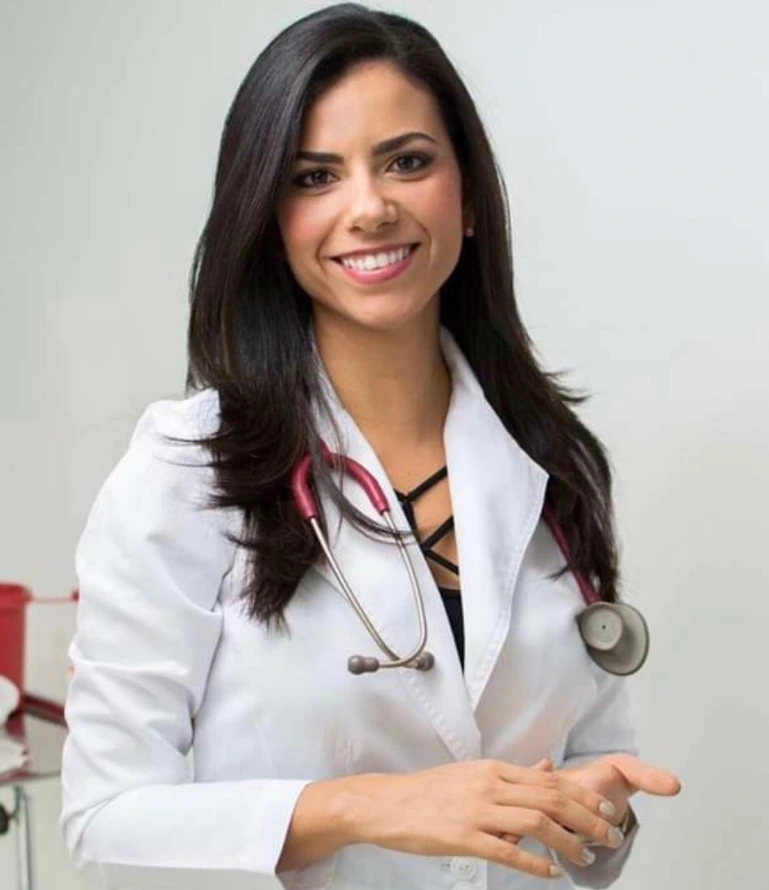
Your trusted physician
Dra. Olga González
Medical Director
Aesthetic Medicine Physician · Longevity & Regenerative Medicine · Health Coach in Nutrition · Universidad de San Martín
Dra. Olga González is the medical director of HealthBridge Medical Tourism. A physician trained at Universidad de San Martín and certified in aesthetic medicine, she has built her practice in El Poblado, Medellín, around longevity, regenerative medicine and biohacking. She personally coordinates each international patient's care — vetting surgeons, accredited hospitals and recovery plans — so that every traveler is treated by board-certified specialists and supported in their own language from the first message to the final follow-up.
- Aesthetic Medicine
- Regenerative & Longevity Medicine
- Biohacking
- Clinical Nutrition
Frequently asked questions
How much does a tummy tuck cost in Colombia?
What is the difference between a full and a mini tummy tuck?
Is a tummy tuck the same as liposuction?
Does a tummy tuck leave a scar?
Does a tummy tuck repair separated muscles?
Is a tummy tuck a weight-loss procedure?
How long do I need to stay in Medellín?
What is recovery like?
Should I wait until I'm done having children?
How long does a tummy tuck last?
Can a tummy tuck be combined with other procedures?
Does HealthBridge perform the surgery?
You may also consider
Other procedures in this specialty
Many patients combine procedures in a single trip. These are the ones we coordinate within the same specialty.
BBL in Colombia
from $3,800 USD · stay 7–12 days
Mommy Makeover in Colombia
from $6,500 USD · stay 10–14 days
Liposuction in Colombia from $3,500
from $3,500 USD · stay 7–10 days
Rhinoplasty in Colombia
from $4,000 USD · stay 7–10 days
Breast Augmentation in Colombia
from $3,500 USD · stay 5–7 days
Plastic Surgery in Medellín from $3,500
from $3,500 USD · stay 7–14 days
Botox in Colombia
from $180 USD · stay 1–3 days
Dermal Fillers in Colombia
from $320 USD · stay 1–3 days
Biostimulators in Colombia: Cost from $450 per Vial
from $450 USD · stay 1–3 days
Medical references
What this page is based on
For each source we state which claim it supports, with a direct link, so you can check it yourself.
-
MedlinePlus (U.S. National Library of Medicine) — Abdominal wall surgery
Backs the boundary we draw around this operation and the recovery we quote. MedlinePlus states that abdominoplasty "is not used as an alternative to weight loss", that it is usually an elective cosmetic procedure, that most people return to work in 2 to 4 weeks and should avoid strenuous activity for 4 to 6 weeks, and it lists scarring, skin loss, nerve damage with pain or numbness, and poor healing among the risks.
Prices, length of stay and package contents are HealthBridge's own figures and do not come from these sources. The U.S. price we compare against comes from our own price study, where every figure is traced to a named U.S. clinic. None of these organizations is affiliated with or endorses HealthBridge.
Sources
Where to verify this information
We're not asking you to take our word for it. These are independent medical bodies whose guidance you can read directly before making any decision.
- American Society of Plastic Surgeons — patient safety resources
- CDC Yellow Book — Medical Tourism: risks, planning and post-travel care
- MedlinePlus (U.S. National Library of Medicine) — patient health information
HealthBridge is not affiliated with or endorsed by these organizations. They are cited as independent reference.
Other specialties
Explore more treatments in Colombia

Ready to take the first step?
Send us your case on WhatsApp and get a personalized plan and quote — free, with no obligation.
El Poblado, Medellín · Mon–Fri 8:00 AM – 6:00 PM · Sat 9:00 AM – 1:00 PM (COT)