
Dental & Veneers
Root Canals & General Dentistry in Colombia: What to Expect
In Medellín from $300 USD · 5–7 day stay Get a free quote →
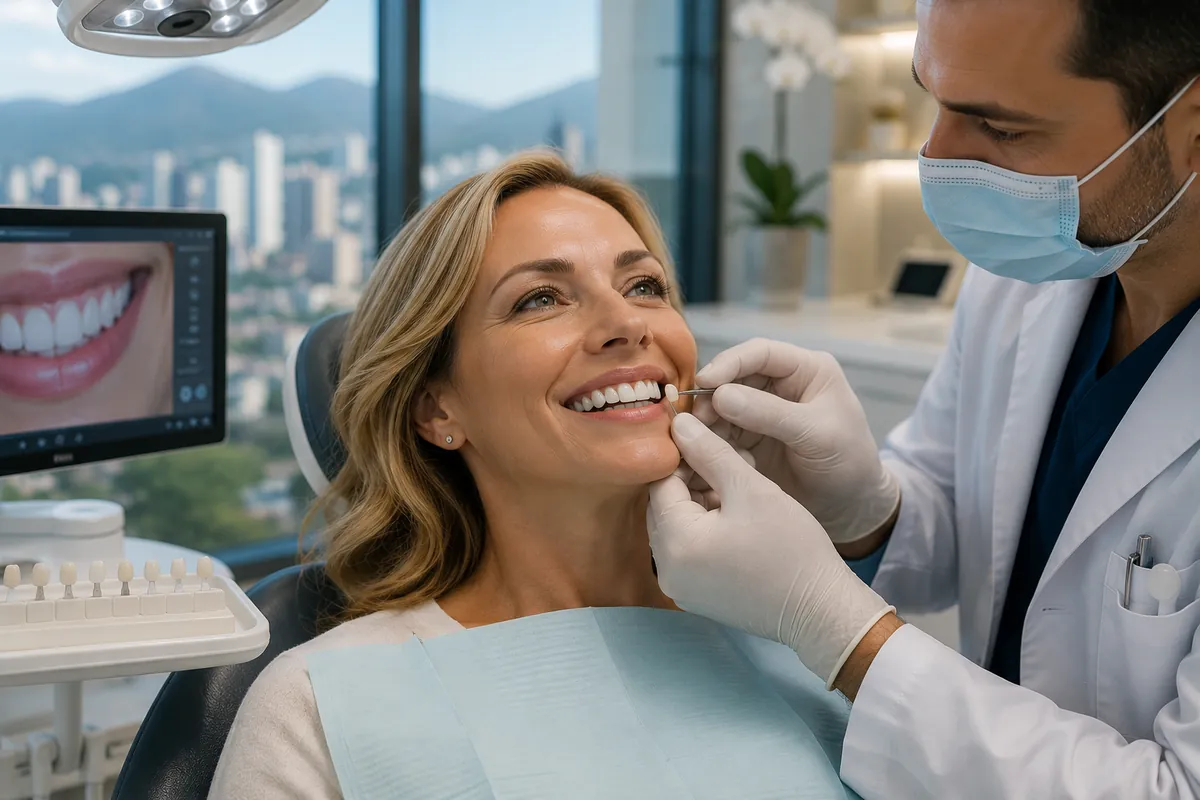
What General and Restorative Dentistry Covers
Not every dental trip is about a Hollywood smile. Before, or alongside, any cosmetic work, most patients need the foundation handled first: healthy teeth and gums. General and restorative dentistry is the broad category that keeps your mouth functioning and pain free, and it is exactly the kind of care many travelers combine with a visit to Medellín.
The most common treatments in this category are dental cleanings and deep cleanings, fillings for cavities, root canals to rescue an infected or badly decayed tooth, tooth extractions when a tooth cannot be saved, and crowns to rebuild and protect a tooth after major decay or a root canal. Together these procedures address the everyday problems that build up over years, especially for people who have delayed care because of cost at home.
A routine cleaning removes plaque and tartar above the gum line and is recommended twice a year. When gum disease has taken hold, a deep cleaning, known as scaling and root planing, removes buildup below the gum line and smooths the tooth roots so the gums can reattach and heal. Fillings repair the small-to-moderate cavities that cause sensitivity and, if ignored, eventually reach the nerve. Getting these basics addressed early is what prevents the far more expensive problems later, and it is the reason a general checkup is the starting point for almost every treatment plan through HealthBridge.
Root Canals Explained: Saving the Tooth
A root canal, known clinically as endodontic treatment, is the procedure that saves a tooth when decay or a crack reaches the soft inner tissue called the pulp. The pulp holds the nerve and blood supply, and once bacteria reach it the tooth becomes infected, which is what produces the throbbing pain, sensitivity to hot and cold, and swelling many people associate with a serious dental problem. Left untreated, that infection can form an abscess and spread.
During the treatment, a dentist or a specialist called an endodontist numbs the area, removes the infected pulp, cleans and shapes the narrow canals inside the roots, disinfects them, and seals them with a biocompatible material. The tooth is then filled and, in most cases, restored with a crown to protect it from fracture. The infection is eliminated but the tooth itself stays in place, keeping your natural bite and root intact.
The idea that a root canal is an ordeal is outdated. Modern endodontics uses effective local anesthesia and refined instruments, so for most patients the experience feels very much like getting a routine filling. In fact, a root canal relieves the severe pain of an infected tooth rather than causing it. Because a crown almost always follows, it helps to understand that step too; our guide to dental crowns explains how the final restoration protects your treated tooth for years to come.
Root Canal vs. Extraction and Implant
When a tooth is badly damaged, patients face a choice: save it with a root canal and crown, or remove it and replace it, usually with a dental implant. There is no single right answer, but in modern dentistry the guiding principle is clear. Whenever a tooth can be reliably saved, keeping your natural tooth is generally the preferred option.
A natural tooth root preserves the surrounding jawbone, maintains the natural feel of your bite, and avoids surgery. A root canal followed by a crown is also typically less expensive and less invasive than removing the tooth and placing an implant, which involves oral surgery and several months of healing before the final crown is attached. For a tooth with enough healthy structure remaining, endodontic treatment is usually the smarter first choice.
There are cases, however, where extraction and an implant make more sense. A tooth that is cracked below the gum line, has lost too much structure, or has failed a previous root canal may not be salvageable. In those situations, an implant is an excellent long-term replacement. The honest way to decide is a thorough evaluation with X-rays, and the board-certified dentists HealthBridge works with will always tell you when a tooth is worth saving and when replacement is the wiser path. If you are weighing several failing teeth at once, our overview of full-mouth reconstruction covers how larger cases are sequenced.
Cost: Colombia vs. the United States
Cost is what drives most patients to look abroad for dental care, and general dentistry shows the difference dramatically. In the United States, a single root canal commonly costs $1,000 or more before you add the crown, which can push the total for one tooth well past $2,000. In Colombia, a root canal by a board-certified dentist or endodontist typically runs about $150 to $300, with the exact figure depending on which tooth is involved and how many canals it has.
The savings extend across the whole category. Fillings, cleanings, deep cleanings, extractions and crowns are all a fraction of U.S. prices in Colombia. For patients who have been putting off several treatments because of cost, the math often means addressing an entire mouth of needed work for less than a single procedure would cost at home, even after factoring in flights and accommodation.
These lower prices reflect Colombia's lower operating and living costs, not a compromise in standards. Dentists in Medellín train to international protocols and use the same reputable materials and equipment found in North American practices. When you request quotes, look for a transparent, itemized estimate that lists each treatment separately. Dra. Olga Gonzalez, our coordinator, helps you obtain a clear treatment plan and quote in advance so you know exactly what your trip will involve before you travel.
The Modern, Comfortable Experience
Fear of pain keeps many people out of the dentist's chair, so it is worth being direct: general dental care today is far more comfortable than its reputation suggests. Every restorative procedure, from a deep filling to a root canal to an extraction, is performed under local anesthesia that fully numbs the area. You remain awake but feel pressure at most, not pain, and for anxious patients, sedation options can be discussed in advance.
Techniques and tools have also advanced. Rotary instruments and digital imaging make root canals faster and more precise than they were a generation ago, and appointments are shorter as a result. Deep cleanings can be split into comfortable sessions, and tooth-colored composite fillings bond directly to the tooth, requiring less drilling than older methods. After most procedures, any tenderness is mild and managed with over-the-counter pain relievers for a day or two.
Good aftercare makes the recovery smooth. Your dentist will explain what to eat, how to keep the area clean, and what mild symptoms are normal versus when to call. Because Medellín's clinics are geared toward international patients, you will typically receive written instructions and a point of contact for questions once you are home. The goal throughout is a calm, unhurried experience that leaves you free to enjoy the rest of your trip.
Combining General and Cosmetic Work in One Trip
One of the biggest advantages of traveling for dental care is efficiency. Instead of spreading treatments across many appointments over months, an experienced clinic can plan your general and cosmetic work together, in a logical sequence, during a single well-organized visit. This is where a facilitator earns its keep: coordinating the schedule so each step happens in the right order.
The sequence matters clinically. Health always comes first, so any cavities, infections or gum disease are treated before cosmetic procedures. A tooth that needs a root canal is stabilized, a crown is placed, and only then does the focus shift to appearance. Once the foundation is healthy, cosmetic treatments such as whitening or veneers can complete the transformation. If a smile makeover is part of your goal, our page on cosmetic dentistry in Colombia explains how those results are designed.
Planning this correctly requires an assessment before you travel, ideally with photos or X-rays, so the dentist can map out how many days you will need and in what order the work will be done. Some treatments require a healing interval between visits, which the clinic will account for. HealthBridge is a facilitator, not a clinic: we connect you with board-certified dentists and endodontists in accredited facilities, coordinate your consultations and logistics, and stay available through your aftercare. Dra. Olga Gonzalez guides you in plain language so that a combined general and cosmetic plan feels manageable rather than overwhelming, and so you return home with both a healthy and a confident smile.
Considering dental & veneers in Colombia?
See the procedure, pricing and the process for international patients on our Cosmetic Dentistry & Veneers.
Procedure guides: Dental Implants Colombia · All-on-4 in Colombia: Cost from $5,500 per Arch
«Veneers go onto a healthy mouth. If there is decay, gum disease or a bite problem, that gets treated first, even if it delays the cosmetic result.»

Dra. Olga González, Medical Director, HealthBridge Medical Tourism, Aesthetic Medicine Physician · Longevity & Regenerative Medicine · Health Coach in Nutrition