
Plastic Surgery
Buccal Fat Removal in Colombia: Slimmer Cheeks, Honestly Explained
In Medellín from $3,500 USD · 7–12 day stay Get a free quote →
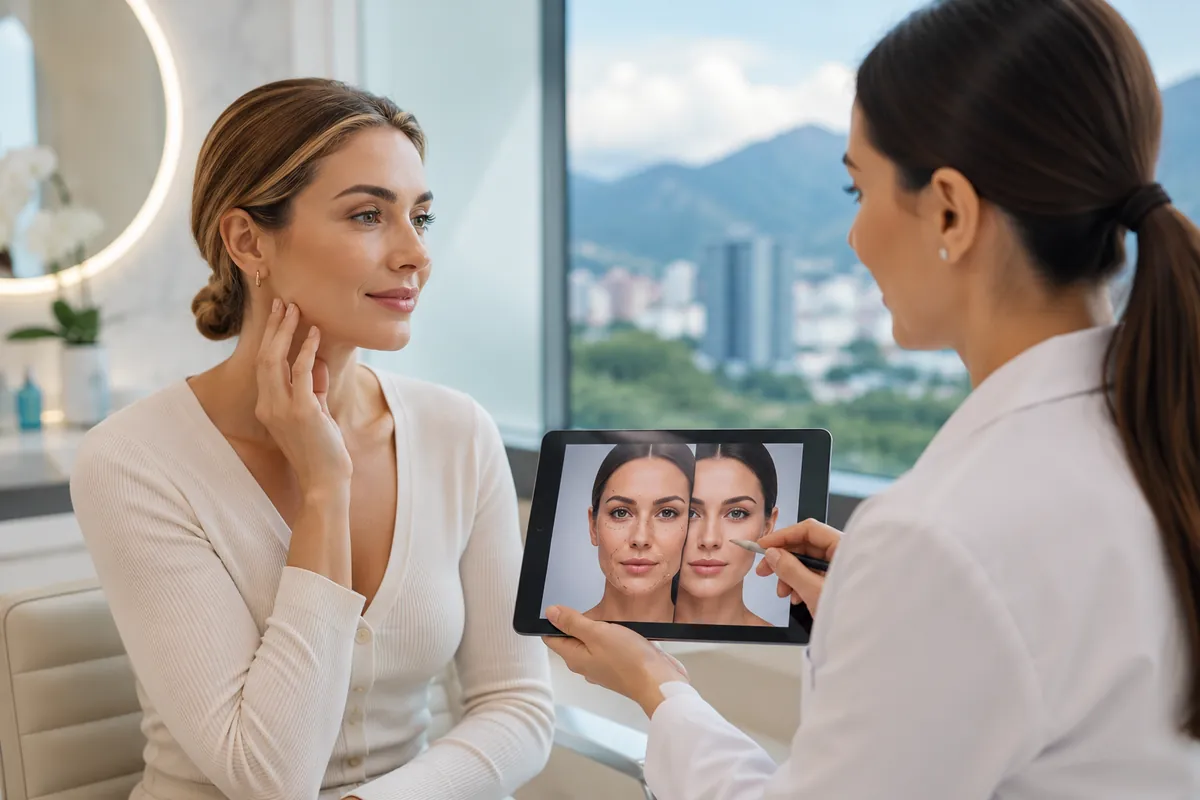
What Is Buccal Fat Removal?
Buccal fat removal, known medically as a bichectomy, is a facial contouring procedure that removes a portion of the buccal fat pad, a naturally occurring cushion of fat that sits deep in the lower cheek. Everyone has these pads on both sides of the face; their size varies from person to person and is largely determined by genetics. In some people the pads are prominent enough to give the mid and lower face a rounded, full appearance often described as "chipmunk cheeks" or a persistently youthful, babyish fullness.
By reducing the volume of this fat pad, the procedure can reveal more definition beneath the cheekbone and create a subtle hollowing that many patients feel makes the face look slimmer and more sculpted. It is important to understand what the surgery does not do: it does not tighten skin, lift sagging tissue or address fat elsewhere in the face. It specifically targets that one deep pad in the lower cheek.
Because the effect is focused and permanent, buccal fat removal is best thought of as a refinement rather than a dramatic transformation. It is one of several tools available in facial surgery, and if you are weighing your options, our overview of plastic surgery in Colombia explains how it fits alongside other body and facial procedures.
Who Is a Good Candidate?
The ideal candidate has naturally full, round lower cheeks that are out of proportion with the rest of the face, and who wants more definition. If your fullness comes from strong, prominent buccal fat pads rather than from your skin, bone structure or overall weight, you are more likely to be pleased with the result. A stable, healthy weight is important, because a face that looks fuller due to recent weight gain or fluid retention may slim naturally without surgery.
Age is a genuine consideration and deserves honesty. As we get older, the face naturally loses fat and volume, and the cheeks tend to hollow on their own. A younger person with very full cheeks may enjoy the extra definition now, but that same person could find their face looks too thin decades later once natural aging takes its course. This is why thoughtful surgeons are cautious with younger patients and with anyone whose fullness is mild.
Good general health, being a non-smoker and having realistic expectations round out the picture. This is a subtle procedure, and the most satisfied patients understand that it sharpens the lower cheek rather than reshaping the entire face. A frank consultation, where the surgeon may gently press on your cheeks to assess the pad, is the best way to know whether you are truly a good fit.
The Quick In-Office Procedure
One of the appeals of buccal fat removal is how straightforward it is. In most cases it is performed in the office under local anesthesia, sometimes with light sedation, and takes roughly thirty minutes to an hour. You are awake and comfortable throughout, and because it is not a major operation, it does not require a hospital stay.
The surgeon makes a small incision on the inside of each cheek, so there are no visible scars on the outside of the face. Through that tiny opening, the buccal fat pad is gently teased into view and a measured portion is removed, while a healthy amount is deliberately left in place. The incisions are then closed with dissolvable stitches inside the mouth. Because the work happens through the lining of the cheek, the procedure leaves nothing visible once you have healed.
The measured part is where surgical judgment matters most. A responsible surgeon removes only a conservative amount and keeps both sides symmetric. This is precise work best done by an experienced, board-certified plastic surgeon who understands facial anatomy, which is exactly the standard HealthBridge holds. You can read more about how we vet and coordinate care on the HealthBridge home page.
Realistic Results and an Honest Caution
Let us be candid, because this is where good guidance matters most. Buccal fat removal can produce a lovely, natural refinement of the lower cheek, but it is not without a real long-term consideration, and the effect is permanent. The buccal fat pad does not grow back, so whatever is removed is gone for good.
The most important honest caution is this: removing too much fat can create a gaunt, hollowed or prematurely aged appearance, and this may not be obvious right away. In your twenties or thirties a hollowed cheek might look striking, but the face continues to lose volume with age. A cheek that is over-hollowed in youth can look drawn and skeletal decades later, and reversing it is difficult, sometimes requiring fat grafting to add volume back. For this reason, the guiding principle among careful surgeons is conservatism: take a little, leave plenty, and favor a subtle result over a dramatic one.
It is also worth remembering that swelling in the first weeks can make the cheeks look fuller than the final result, so the true outcome only becomes clear after the tissues settle. A trustworthy surgeon will sometimes advise a patient against the procedure entirely if their cheeks are not full enough, or recommend a very modest reduction. That honesty is a feature, not a limitation, and it is central to how we work at HealthBridge.
Recovery and Combining With Other Facial Work
Recovery from buccal fat removal is relatively easy compared with larger surgeries. Most swelling and mild bruising settle over one to two weeks, with the cheeks looking their fullest in the first few days before gradually refining. You may be asked to eat soft foods and rinse with an antiseptic mouthwash while the internal incisions heal, and to avoid vigorous activity for a short period. Discomfort is usually mild and manageable, and many people return to desk work within a few days.
Because the healing is quick and the incisions are inside the mouth, this can be a short trip. Many international patients plan a brief stay, allowing time for the consultation, the procedure and an early check before traveling home. The final, settled result develops over the following weeks and months as the last of the swelling resolves.
Buccal fat removal is often combined with other facial procedures for a more harmonious outcome, since one small change can be enhanced by another. Some patients pair it with a rhinoplasty to balance the profile, while older patients whose main concern is sagging rather than fullness may be better served by a facelift. During your consultation, the surgeon helps you decide whether cheek reduction alone will meet your goals or whether a combined plan makes more sense.
Cost in Colombia and Next Steps
Cost is a meaningful reason many international patients look to Colombia. Buccal fat removal in the United States commonly runs into the thousands of dollars, while comparable surgery by a board-certified specialist in Medellín is typically a fraction of that price. The difference reflects lower operating and living costs in Colombia, not lower standards; many surgeons here are certified by the Colombian Society of Plastic Surgery (SCCP) and trained to international protocols.
Because the exact figure depends on your anatomy and whether you combine the procedure with other facial work, HealthBridge helps you obtain a clear, itemized quote rather than a vague estimate. A transparent quote should specify the surgeon's fee, the facility, anesthesia and follow-up so there are no surprises. If you decide to combine procedures, a single trip can address more than one goal efficiently.
HealthBridge is a facilitator, not a clinic. We connect you only with SCCP board-certified surgeons operating in accredited facilities, and we coordinate consultations, vetting, logistics and aftercare. Our coordinator, Dra. Olga Gonzalez, guides you in plain language through every step, from your first questions to your recovery. For the right candidate, and with a conservative, experienced hand, buccal fat removal can deliver a refreshed, sculpted look, and the most important step toward that result is choosing a team that values your long-term appearance over a quick, dramatic change.
Considering plastic surgery in Colombia?
See the procedure, pricing and the process for international patients on our Plastic Surgery & Aesthetic Medicine.
Procedure guides: BBL in Colombia · Mommy Makeover in Colombia · Liposuction & Liposculpture in Colombia from $3,500
«There are patients we take all the way to the operating room door and the surgeon says no. When that happens, the patient has not lost the trip: they have avoided a complication.»

Dra. Olga González, Medical Director, HealthBridge Medical Tourism, Aesthetic Medicine Physician · Longevity & Regenerative Medicine · Health Coach in Nutrition