
Plastic surgery · Medellín, Colombia
Rhinoplasty in Colombia — Nose Job in Medellín
Aesthetic and functional rhinoplasty in Medellín with SCCP board-certified plastic surgeons focused on facial surgery, an accredited operating room, and a dedicated anesthesiologist for every case — from about $4,000 USD, with a typical stay of 7–10 days. Coordinated end to end by our medical director, Dra. Olga González.
- SCCP board-certified facial surgeons
- Aesthetic + functional
- From ~$4,000 USD
- Dedicated anesthesiologist
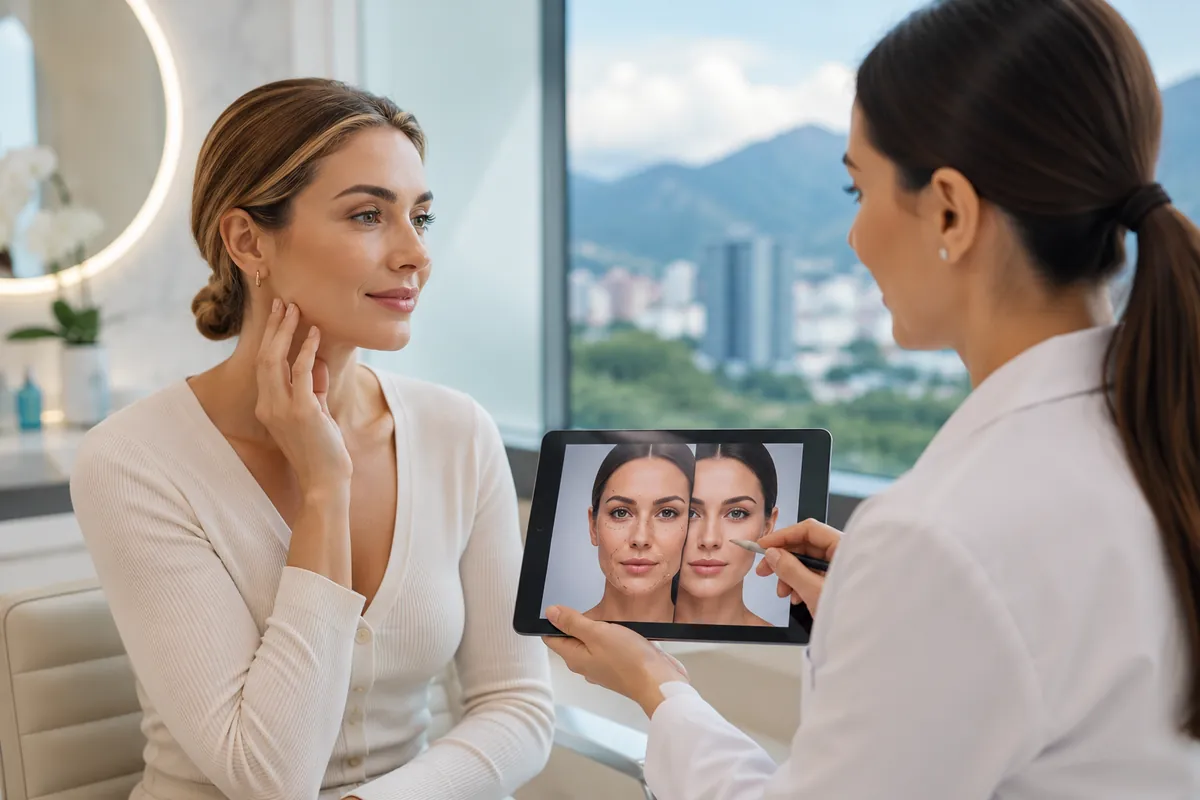
A rhinoplasty (nose job) in Colombia reshapes the nose — the bridge, tip, nostrils and size — to bring it into balance with your face, using either the open or closed technique. When breathing is also a problem, a septorhinoplasty corrects a deviated septum in the same operation. In Medellín, rhinoplasty starts near $4,000 USD, versus roughly $10,000+ in the U.S. Because the nose is one of the most technically demanding areas in surgery — with a comparatively high revision rate — it should be done by an SCCP board-certified surgeon focused on facial work. A typical stay is 7–10 days; the splint comes off before you fly, and swelling settles over months.
In Colombia
$4,000
USD from
In the U.S.
$10,000
USD average
Your saving
60%
less
What a rhinoplasty actually reshapes
A rhinoplasty — the surgical "nose job" — reshapes the nose so that it sits in better proportion with the rest of your face. Because the nose is the central feature, even small, millimetre changes read clearly: a board-certified plastic surgeon can lower or straighten a prominent bridge (dorsal hump), refine a tip that is bulbous, drooping or over-projected, narrow wide nostrils, correct a crooked profile, or adjust overall size. The goal is balance and harmony, not a "perfect" nose lifted from a photo.
The work is done on the bone and cartilage framework beneath the skin, using one of two approaches. In the closed (endonasal) technique, every incision is hidden inside the nostrils, which can mean slightly less swelling and no external scar. In the open technique, a tiny additional incision across the columella — the strip of skin between the nostrils — lets the surgeon lift the skin and see the structures directly, which is valuable for complex tips, major reshaping and revisions. Neither is universally "better"; the right choice depends on your anatomy and goals, and it is your surgeon's judgement to make.
It is worth being clear about what rhinoplasty is not. It does not change who you are or guarantee a specific celebrity result, and it cannot ignore the limits of your own skin thickness, cartilage strength and healing. A thick-skinned tip refines more slowly and subtly than a thin-skinned one, for example. The most satisfied patients understand these constraints from the start — which is exactly why an honest planning conversation matters more here than in almost any other cosmetic procedure.
- Bridge — reduce a hump, straighten a crooked profile, or build up a low bridge.
- Tip — refine a bulbous, drooping or over-projected tip for definition.
- Nostrils & size — narrow wide nostrils and rebalance overall proportion.
- Open vs closed — the surgeon chooses the approach for your anatomy.
Breathing too — functional septorhinoplasty
For many patients the nose is not only about appearance. A deviated septum — when the wall of cartilage and bone dividing the nostrils is crooked — enlarged turbinates, or a collapsing internal nasal valve can block airflow, disturb sleep and cause chronic congestion. A functional septorhinoplasty corrects these internal problems and reshapes the outside of the nose in the same operation, so you are not choosing between breathing well and liking your nose.
This combined approach is often the more sensible one. The surgeon can straighten the septum and open the airway while refining the bridge and tip through the same incisions, and cartilage removed from a deviated septum frequently doubles as the graft material used to support the reshaped nose. Planning both together also protects the result: aggressive cosmetic reduction done without regard for the airway can actually worsen breathing, which is one more reason a surgeon experienced in both functional and aesthetic work matters.
If your concern is purely medical — obstructed breathing with no wish to change the nose's shape — a septoplasty alone may be all you need, and we can quote that separately. But where both goals exist, addressing them in one anesthetic, one recovery and one trip is usually the better value and the better outcome. Your surgeon documents the obstruction on examination and sets realistic expectations for how much your airflow should improve once the swelling settles.
Why choose HealthBridge
What's included and why it matters
A rhinoplasty is only as good as the surgeon planning it and the setting around it. Here is what a HealthBridge rhinoplasty program is built around — and why each part is non-negotiable.
SCCP board-certified facial surgeons
Your procedure is performed by an experienced plastic surgeon certified by Colombia's SCCP, with a focus on facial and nasal surgery — the subspecialty that matters most for a technically demanding operation like this.
Dedicated anesthesiologist, every case
A separate anesthesiologist is present for the entire operation to manage your anesthesia and monitor your vitals — never the surgeon doubling up. This is a core safety standard, not an upsell.
Accredited operating rooms
Surgery is done in a properly accredited, equipped OR — not a back-room clinic. When a price sits far below the Colombian range, it usually means this corner was cut.
Aesthetic and functional together
If a deviated septum or blocked breathing is part of the picture, it can be corrected in the same operation as the reshaping — one anesthetic, one recovery, one trip.
Honest planning with digital imaging
Goals are explored with on-screen imaging and a frank conversation about what your anatomy allows. A simulation is a goal to discuss, never a guarantee — and we say so plainly.
Bilingual, end-to-end coordination
One accountable coordinator, in English or Spanish, from your first message through recovery — led by medical director Dra. Olga González, with airport transfers and splint removal handled.
Ethnic and preservation rhinoplasty
A good rhinoplasty respects your identity. Ethnic rhinoplasty is not a separate operation so much as a philosophy: reshaping the nose while preserving the features that make it harmonious with your face and heritage, rather than imposing a single "ideal" profile on everyone. Noses of African, Afro-Latino, Middle Eastern, Asian and mestizo backgrounds differ in skin thickness, cartilage strength and bridge height, and each calls for a different technical plan — sometimes building up and supporting the structure rather than only reducing it.
In Colombia this is everyday work rather than a niche. Surgeons here operate on the full range of Latin American and international anatomies, so the aim is a natural, balanced nose that still looks like yours — refined, but not obviously "operated." Overly aggressive reduction that ignores ethnic proportion is precisely how noses end up looking pinched, unnatural or mismatched to the face, and an experienced facial surgeon is trained to avoid it.
Preservation rhinoplasty is a more recent structural philosophy that has gained ground internationally. Instead of removing a hump and then rebuilding, the surgeon preserves and repositions more of the natural bridge and its lining, which can mean a smoother profile, more predictable healing and a natural dorsal line. It is not right for every nose, and whether it suits you is a decision your surgeon makes from your anatomy — but it reflects the modern, tissue-respecting direction that reputable facial surgeons now follow.
Realistic expectations — and the honest truth about revision
We will be candid because it protects you: rhinoplasty is widely regarded as one of the most technically difficult operations in all of cosmetic surgery, and it carries one of the highest revision rates of any aesthetic procedure. This is not a reflection on any one surgeon; it is the nature of operating on a small, three-dimensional structure of bone and cartilage that then heals unpredictably under skin of varying thickness. Even in expert hands, a proportion of patients ultimately choose a small touch-up. Anyone who promises a flawless, guaranteed result is not being honest with you.
The right frame is facial harmony, not perfection. The purpose of a rhinoplasty is a nose that fits your face and looks natural — not a mathematically "perfect" nose, and not someone else's nose. Because millimetres matter and swelling distorts the view for months, the outcome is a gradual reveal, not an instant one. Patients who arrive expecting a specific, exaggerated result are the ones most often disappointed; those who want a balanced, believable improvement are the ones most often delighted.
Good surgery lowers the odds of needing a revision but does not eliminate them, so choosing the surgeon well is the single most important decision you make — far more important than finding the lowest price. It also means asking honestly, before you travel, how a revision would be handled if you needed one. We would rather set this expectation plainly now than have you feel misled later. Our deeper, frank discussion lives in the rhinoplasty in Colombia guide.
Options
Rhinoplasty techniques and related procedures
- Open rhinoplasty
- A tiny incision across the columella lifts the skin so the surgeon sees the structures directly. Preferred for complex tip work, major reshaping and revisions, where full visibility and precise cartilage support matter most.
- Closed rhinoplasty
- All incisions are hidden inside the nostrils, with no external scar and often slightly less swelling. Well suited to more straightforward reshaping in the right anatomy — the surgeon decides if it fits your goals.
- Ethnic / preservation rhinoplasty
- Reshaping that respects your heritage and facial harmony rather than imposing one 'ideal' profile — often building and supporting structure, not only reducing it. Preservation techniques keep more of the natural bridge for a smooth, natural line.
- Functional septorhinoplasty
- Corrects a deviated septum, enlarged turbinates or internal valve collapse to improve breathing, while reshaping the nose in the same operation — so airflow and appearance are addressed together.
- Revision rhinoplasty
- A second operation to refine or correct a previous rhinoplasty. It is more complex than primary surgery because of scar tissue and altered anatomy, and is planned individually by an experienced surgeon after careful assessment.
Why patients choose Colombia — and Medellín specifically
The cost difference is real and substantial. A rhinoplasty that commonly runs $10,000 or more at a reputable U.S. practice frequently starts near $4,000 USD in Medellín, and a combined septorhinoplasty that would be considerably more in the States is a fraction of that here. Crucially, the gap comes from the lower cost of operating in Colombia — overhead, not corners. When a rhinoplasty price sits far below even the Colombian range, that is a warning sign about the surgeon or facility, not a bargain to chase.
But price is not why Medellín has become a genuine facial-surgery destination. Colombia has a long, serious tradition in aesthetic surgery, and its SCCP (Sociedad Colombiana de Cirugía Plástica) board-certified surgeons — many with a dedicated focus on the face and nose — are experienced, high-volume and internationally regarded. The city itself makes recovery comfortable: a spring-like climate year-round, the walkable, hotel-rich El Poblado district, and direct flights from Miami, Fort Lauderdale, New York, Houston and Panama City that put it a short hop from the U.S. and Central America.
What sets HealthBridge apart is that we treat this as medical care, not a shopping trip. Many "nose job package" operators abroad are sales machines that funnel patients to whoever is cheapest that week. Here, our medical director Dra. Olga González personally coordinates your care — vetting the surgeon match for facial work specifically, confirming the facility is accredited, and staying reachable in English or Spanish from your first message through your recovery. You get a named, accountable coordinator rather than a call center.
- Meaningful, honest savings — lower overhead, not lower standards.
- SCCP facial surgeons — credentialed, experienced, focused on the nose.
- Comfortable recovery base — spring-like Medellín, El Poblado, easy direct flights.
- One accountable coordinator — Dra. Olga González, bilingual, end to end.
Am I a good candidate for rhinoplasty?
Candidacy for rhinoplasty is a medical judgement your surgeon makes, and it rests as much on your expectations as on your anatomy. A good candidate is in generally good health, a non-smoker (or willing to stop well in advance, since nicotine badly impairs healing of the delicate nasal tissues), has finished facial growth — which is why surgeons generally wait until the mid-to-late teens at the earliest — and, above all, wants a natural improvement rather than a specific "perfect" result.
Your anatomy sets real limits that no surgeon can overrule. Skin thickness, the strength and amount of your cartilage, previous injuries and prior nose surgery all shape what is achievable. Thick skin refines more slowly and subtly; thin skin shows every underlying detail. Patients seeking correction of a deviated septum or breathing problem are often excellent candidates for a combined septorhinoplasty. Those chasing an extreme change, or a nose that does not fit their face, are gently redirected toward what will actually look right.
Some situations call for caution or a frank "not yet." Uncontrolled medical conditions, active infection, unrealistic goals, or unresolved body-image concerns are all reasons an ethical surgeon will decline or delay surgery. Because the nose is central to the face, many patients weigh rhinoplasty alongside other facial work — if you are exploring the aging face more broadly, our facelift in Colombia overview is a useful companion read.
The honest bottom line: candidacy is decided by the operating surgeon after reviewing your history, your breathing, your photos and your goals — and sometimes the responsible answer is "a smaller change than you asked for," or "not this procedure." That is a mark of good care, not a failure of it.
Pricing
How much it costs in Colombia
| Option | In Colombia | In the U.S. |
|---|---|---|
| Rhinoplasty (primary, aesthetic) | from ~$4,000 USD | ~$10,000+ USD |
| Septorhinoplasty (functional + aesthetic) | individualized quote | $12,000–$16,000+ USD |
| Ethnic / preservation rhinoplasty | individualized quote | $10,000–$15,000+ USD |
| Revision rhinoplasty | quoted after assessment | $15,000–$25,000+ USD |
| Septoplasty (functional only) | from ~$3,500 USD | $6,000–$12,000+ USD |
Reference 'from' prices in USD, subject to medical assessment.
Full breakdown, by area and by technique, in our guide to rhinoplasty cost in Colombia.
At a glance
Rhinoplasty: Colombia vs the United States
| Colombia (HealthBridge) | United States | |
|---|---|---|
| Rhinoplasty (from) | ~$4,000 USD | ~$10,000+ USD |
| Septorhinoplasty | individualized quote | $12,000–$16,000+ USD |
| Surgeon | SCCP board-certified, facial focus | Board-certified, at premium pricing |
| Anesthesia | Dedicated anesthesiologist, every case | Dedicated anesthesiologist |
| Wait time | Days–weeks | Weeks–months |
| Recovery setting | Spring-like Medellín, concierge, 7–10 days | At home |
The process — imaging, planning and the operation
A rhinoplasty is only as good as its plan, so the process starts long before the operating room. It begins with a free, no-obligation assessment: you send clear photos of your nose from several angles, a short medical history, and a description of what bothers you — appearance, breathing, or both. Dra. González's team reviews your case and matches you with an SCCP board-certified surgeon who focuses on facial and nasal surgery.
Planning often uses digital imaging (morphing), where your photo is adjusted on screen to explore possible profiles together. This is a genuinely useful communication tool — it aligns your expectations with the surgeon's — but it is important to understand it honestly: a simulated image is a goal to discuss, never a contract or a guarantee. Living tissue heals its own way, and a good surgeon will tell you which parts of a simulation are realistic for your anatomy and which are not.
On the day, the surgery is performed under general anesthesia managed by a dedicated anesthesiologist in an accredited operating room, and usually takes a few hours depending on complexity — a straightforward tip refinement is shorter than a full septorhinoplasty or a revision. The surgeon reshapes the bone and cartilage, using cartilage grafts where support is needed, then places an external splint to protect the new framework while it sets. Most primary rhinoplasty is done as day surgery or with a short observation stay, on your surgeon's advice.
Recovery — the splint, the swelling and the long view
Recovery from rhinoplasty is more about patience than pain, and setting the timeline honestly prevents most worry. In the first week you wear an external splint or cast over the bridge, and you may have soft internal splints or light packing for a short time. Expect swelling and bruising around the eyes — sometimes dramatic-looking — which peaks in the first two or three days and then fades noticeably over one to two weeks. Discomfort is usually mild and well controlled; the stuffy, congested feeling from internal swelling is often the least pleasant part.
The timing of your stay is deliberate. We recommend 7 to 10 days in Medellín so your surgeon can monitor early healing and, importantly, remove the splint before you fly home — travelling with the cast still on is uncomfortable and inconvenient. Your surgeon clears you for flying, and we keep you supported afterward. Most people feel presentable enough to return to non-physical work and social life within about two weeks, once the splint is off and the visible bruising has settled.
Here is the part that requires real patience: the nose keeps refining for a long time. The bulk of the swelling resolves over the first several months, but subtle swelling — especially in the tip, and more so with thicker skin — can take up to a full year to disappear completely, at which point the final, definitive shape is revealed. What you see at two weeks, or even two months, is not your finished result. Every reputable surgeon will keep reminding you of this, because impatience is the enemy of satisfaction in rhinoplasty.
Practical care in the meantime is simple but strict: keep your head elevated early on, avoid bumping or resting glasses on the bridge as directed, skip strenuous exercise for several weeks, and protect the nose from sun. Follow your surgeon's specific instructions to the letter — the healing of such delicate tissue rewards discipline.
Planning your trip and what's included
Planning a surgical trip abroad sounds daunting, but the point of a facilitator is that one team handles the logistics so you can focus on healing. After your free assessment and surgeon match, you receive an itemized quote in USD. Because a rhinoplasty is highly individualized — a simple tip refinement, a full septorhinoplasty and a revision are very different operations — the final price and plan follow the surgeon's review rather than a fixed wall price.
A typical rhinoplasty program with HealthBridge includes the surgeon's fee, the accredited operating-room and facility costs, the dedicated anesthesiologist, standard pre-operative labs, splint removal and follow-up checks during your stay, along with airport transfers and bilingual coordination throughout. We are equally clear about what is not included — international flights, your hotel, and any optional add-ons — so there are no surprises after you land.
- Free assessment. Share photos, history and goals by WhatsApp; receive honest guidance and an itemized USD quote.
- Schedule & travel. Fly into Medellín's MDE airport — direct from Miami, Fort Lauderdale, New York, Houston and Panama City. We arrange transfers and help with a nearby hotel.
- Surgery & stay. Your operation is performed in an accredited OR; plan for 7–10 days in Medellín for checks and splint removal.
- Fly-home clearance. The splint comes off before you travel and your surgeon clears you to fly — and we stay reachable afterward.
Throughout, our promise is not a magazine-cover nose — it is a safe, board-certified procedure, an honest plan, and a named coordinator who stays with you. Because trust matters most here, Dra. Olga González does not perform your surgery; an experienced SCCP board-certified facial surgeon does, with a dedicated anesthesiologist present. Her role as medical director is to match you to the right surgeon, confirm the setting meets real standards, and make sure you understand honestly what rhinoplasty can and cannot do. To go deeper, start with our plastic surgery in Colombia overview and our rhinoplasty guide, and if you are considering combined body work, see the mommy makeover overview. Then reach out from our home page for a free assessment.
How it works
Your medical journey, step by step
Part of our Plastic Surgery & Aesthetic Medicine program.
Free assessment & quote
Message us on WhatsApp with your case, records or photos. We review it and send a plan and quote in USD before you book a flight — at no cost.
Travel plan
We coordinate a board-certified specialist, accredited hospital, dates, accommodation and airport transfers in Medellín.
Procedure
You're treated by board-certified specialists in accredited facilities, with bilingual support at every step.
Recovery & follow-up
You recover in Medellín with included check-ups and WhatsApp follow-up once you're home.
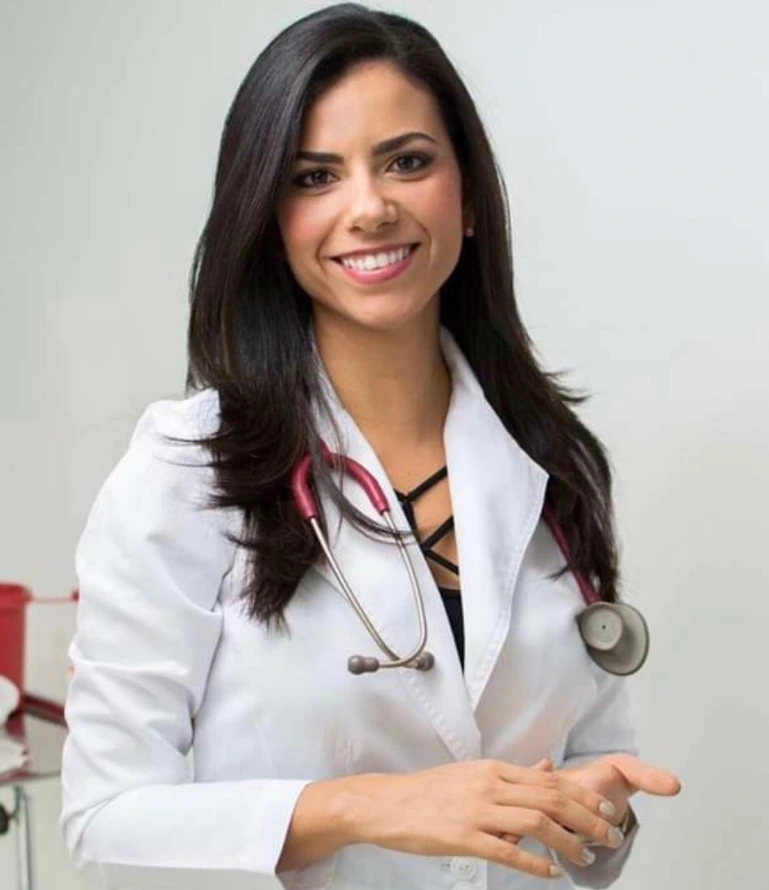
Your trusted physician
Dra. Olga González
Medical Director
Aesthetic Medicine Physician · Longevity & Regenerative Medicine · Health Coach in Nutrition · Universidad de San Martín
Dra. Olga González is the medical director of HealthBridge Medical Tourism. A physician trained at Universidad de San Martín and certified in aesthetic medicine, she has built her practice in El Poblado, Medellín, around longevity, regenerative medicine and biohacking. She personally coordinates each international patient's care — vetting surgeons, accredited hospitals and recovery plans — so that every traveler is treated by board-certified specialists and supported in their own language from the first message to the final follow-up.
- Aesthetic Medicine
- Regenerative & Longevity Medicine
- Biohacking
- Clinical Nutrition
Frequently asked questions
How much does rhinoplasty cost in Colombia?
Open or closed rhinoplasty — which is better?
Can rhinoplasty fix my breathing?
What is ethnic or preservation rhinoplasty?
How long do I need to stay in Medellín?
When is the splint removed and when can I fly?
How long until I see my final result?
Is rhinoplasty painful? What is recovery like?
Will I need a revision?
Am I a good candidate for rhinoplasty?
Are the results permanent?
Does HealthBridge perform the surgery?
You may also consider
Other procedures in this specialty
Many patients combine procedures in a single trip. These are the ones we coordinate within the same specialty.
BBL in Colombia
from $3,800 USD · stay 7–12 days
Mommy Makeover in Colombia
from $6,500 USD · stay 10–14 days
Liposuction in Colombia from $3,500
from $3,500 USD · stay 7–10 days
Tummy Tuck in Colombia
from $4,000 USD · stay 7–10 days
Breast Augmentation in Colombia
from $3,500 USD · stay 5–7 days
Plastic Surgery in Medellín from $3,500
from $3,500 USD · stay 7–14 days
Botox in Colombia
from $180 USD · stay 1–3 days
Dermal Fillers in Colombia
from $320 USD · stay 1–3 days
Biostimulators in Colombia: Cost from $450 per Vial
from $450 USD · stay 1–3 days
Sources
Where to verify this information
We're not asking you to take our word for it. These are independent medical bodies whose guidance you can read directly before making any decision.
- American Society of Plastic Surgeons — patient safety resources
- CDC Yellow Book — Medical Tourism: risks, planning and post-travel care
- MedlinePlus (U.S. National Library of Medicine) — patient health information
HealthBridge is not affiliated with or endorsed by these organizations. They are cited as independent reference.
Other specialties
Explore more treatments in Colombia

Ready to take the first step?
Send us your case on WhatsApp and get a personalized plan and quote — free, with no obligation.
El Poblado, Medellín · Mon–Fri 8:00 AM – 6:00 PM · Sat 9:00 AM – 1:00 PM (COT)