Plastic Surgery
Is Medical Tourism Safe? The Honest Answer
Why the question needs to be broken up
"Is medical tourism safe" bundles together things that have almost nothing in common. A twenty-minute injectable appointment and a six-hour combined body surgery are both medical tourism. So is a dental crown, a knee replacement, an IVF cycle and a stem-cell infusion. Their risks differ by orders of magnitude, and no single answer covers them.
It also frames risk as a property of place, which is mostly wrong. The things that actually determine your outcome are the procedure you chose, the specialist who performs it, the facility's standards, your own health going in, and how much you attempt in one session. Those variables exist identically at home. What travel adds is a specific and enumerable set of extra risks, which is what the rest of this article is about.
The honest way to answer is therefore: some medical travel is very safe, some carries meaningful risk, and the difference is mostly under your control. Anyone who answers the question with an unqualified "yes, completely" is selling, and anyone who answers with an unqualified "no, never" has not looked at how many people have straightforward, uneventful treatment abroad every year.
The risks travel genuinely adds
1. Clots on the flight home. Long-haul flights and recent surgery are both independent risk factors for deep vein thrombosis, and together they compound. This is the single best-understood danger in medical travel, and it is almost entirely avoidable by respecting the flying window your surgeon gives you, moving and hydrating on the flight, and using compression as instructed. Our guide to when you can fly after surgery gives the ranges by procedure.
2. Discontinuity of care. If something goes wrong at day ten, you are at home and your surgeon is not. That risk is managed by agreeing follow-up before you travel, leaving with a complete treatment record, and knowing who provides local care and how the treating specialist coordinates with them. A programme that has no answer to this has left the largest travel-specific risk unmanaged.
3. Delayed detection. Complications that would be caught at a routine post-op visit can be missed when reviews are remote. This is why the length of stay matters, and why leaving before your scheduled reviews to save a hotel night is a false economy.
4. Infection and unfamiliar resistance patterns. Outbreaks traced to specific clinics abroad have been documented, and antimicrobial resistance patterns differ between countries, which can complicate treatment back home. This is a facility-standards question, and it argues for accredited facilities and against the clinic offering the lowest price.
5. Legal recourse. If something goes seriously wrong, pursuing it across borders is difficult, slow and often impractical. That is a real asymmetry and it should raise, not lower, the standard of evidence you require before choosing a provider.
The risk that causes the most harm: doing too much
If you read the accounts of serious adverse outcomes in cosmetic medical tourism, one pattern recurs far more than any other, and it is not exotic. It is too many procedures in one operation.
The logic is understandable and that is what makes it dangerous. You have flown a long way, taken time off, and the marginal cost of adding another procedure is small. So a tummy tuck becomes a tummy tuck with liposuction and breast surgery, and a six-hour operation becomes a nine-hour one. Operative time, blood loss, fluid shifts, anaesthetic exposure and clot risk all rise together, and they do not rise linearly.
A surgeon who limits what will be done in one session, or stages it across two trips, is protecting you at direct cost to their own revenue. That is one of the strongest positive signals you can get. Conversely, a clinic that enthusiastically agrees to everything you ask for in a single operation is not being accommodating — it is skipping the judgement you are paying for.
Procedure-specific risk matters here too. Some cosmetic operations carry materially higher risk than others regardless of country: the BBL is the clearest example, and it is worth reading about specifically rather than generically. Large-volume liposuction, long combined cases and surgery in patients with significant comorbidities all belong in the "requires most care" category.
What the statistics can and cannot tell you
You will find confident numbers quoted in both directions. Treat almost all of them with suspicion, for a straightforward reason: the denominator is unknown. Nobody reliably counts how many people travel for treatment, so complication rates for medical travel cannot be computed the way they can for a hospital's own case series.
What does exist is case reports, outbreak investigations, and coverage of individual deaths — all of which are real and worth taking seriously, but all of which are selected for being newsworthy. Uneventful treatments do not generate reports. That asymmetry means the news cannot tell you the rate, only that the tail exists.
The practical conclusion is not reassurance, it is the opposite of a shortcut: because you cannot lean on aggregate data, you have to evaluate the specific provider. Country-level reasoning — "Colombia is safe", "abroad is dangerous" — is the wrong resolution. Two clinics in the same city can differ more than two countries do.
The same caution applies to savings claims. The commonly advertised "50–70%" is real in bariatric surgery, dental work, orthopaedics, injectables and regenerative medicine, and materially overstated in cosmetic surgery, where the U.S. figures usually quoted are surgeon's fees alone. We would rather give you a number you can verify, as we set out on our about page.
What actually lowers your risk
These are the checks that change outcomes, in rough order of impact:
- Verify the specialist's registration yourself. Not the clinic's marketing, the actual specialty credential and where it was obtained. Our guide to choosing a surgeon in Colombia explains what to ask for and how to check it.
- Confirm where the procedure happens. A licensed surgical facility or hospital, not a consulting room. For anything under general anaesthesia, ask who the anaesthetist is and what the arrangement is for transfer to a higher level of care if needed.
- Check that accreditation is current. Colombia's national accreditor is ICONTEC, and some Colombian hospitals also hold international accreditation. Accreditations lapse and are renewed on cycles — international hospital accreditation typically runs in three-year terms — so ask for the current certificate rather than accepting a logo on a website.
- Refuse the mega-session. Limit what is done at once, and stage the rest.
- Take pre-operative clearance seriously. Uncontrolled diabetes, untreated sleep apnea, active smoking and unmanaged hypertension are the conditions that turn routine operations into complicated ones.
- Stay long enough. Attend every scheduled review before flying, and respect the flying window.
- Leave with your records. Operative report, implants and products used with references, medications, and direct contact for the treating physician.
- Do not choose on price. In medicine, the components have real costs. A quote far below the market usually means something was removed from it.
Where the risk is genuinely low
It is worth being specific, because treating all medical travel as equally fraught leads people to over-worry about safe treatments and under-worry about risky ones.
Low risk: botulinum toxin and dermal fillers, most dental work including crowns and veneers, refractive eye surgery such as LASIK, diagnostic work-ups, and most non-invasive dermatology. These involve no general anaesthesia, minimal recovery and no flying restriction, and the main question is quality of result rather than physical safety. Filler carries one genuinely serious complication — vascular occlusion — which is why the injector should be a physician, but the category as a whole is not comparable to surgery.
Moderate: single, well-defined surgical procedures in healthy patients — a rhinoplasty, a hernia repair, an eyelid surgery, a single-joint replacement in a fit candidate.
Requires the most care: large-volume body contouring, combined multi-procedure operations, BBL, bariatric surgery in patients with significant comorbidities, and anything in a patient whose chronic conditions are not well controlled.
If you are considering treatment abroad for the first time, starting in the low-risk category is a reasonable strategy in itself. An aesthetic medicine trip or a dental visit shows you how a provider actually operates — how they consult, whether they decline things, how they follow up — at a fraction of the exposure of surgery.
The honest bottom line
Medical travel is not inherently dangerous, and it is not inherently safe. For low-risk treatments with a competent provider, the additional risk over having the same thing done at home is small. For major surgery, poorly chosen providers, or several procedures crammed into one session, the risk is real and has cost people their health and occasionally their lives.
What separates those two outcomes is almost entirely knowable in advance: the procedure, the specialist, the facility, your own health, how much is attempted at once, how long you stay, and what happens after you fly home. None of those requires insider knowledge — they require asking specific questions and being willing to walk away from vague answers.
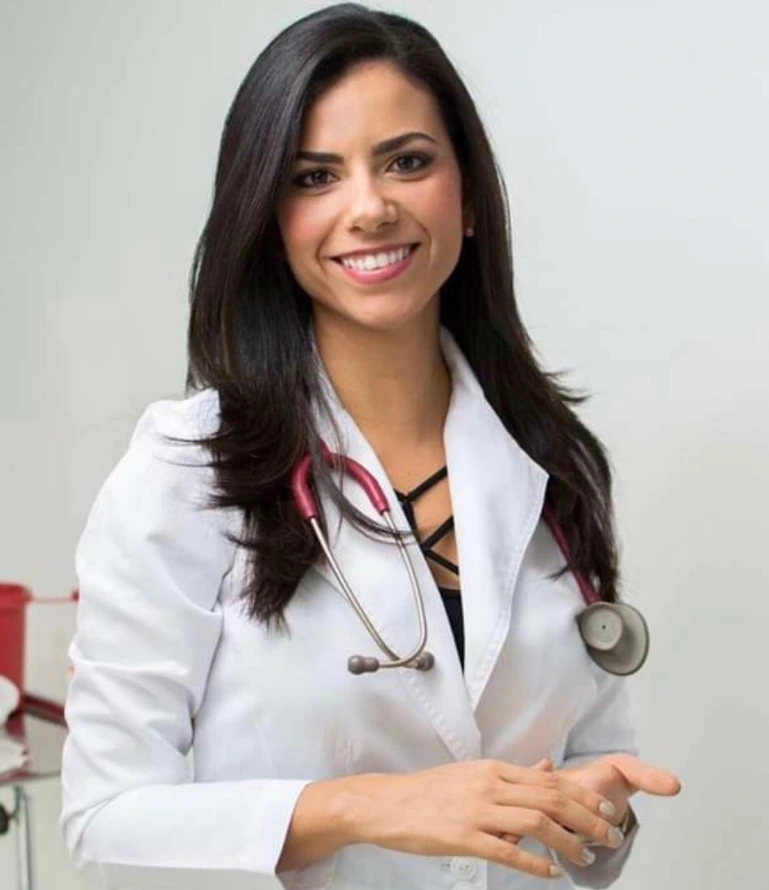
At HealthBridge we are a facilitator: we coordinate board-certified specialists and accredited facilities, and the treating physician is the one who performs and takes responsibility for your care. Our medical director, Dra. Olga González, reviews cases and coordinates the medical side. We would rather tell a patient that a plan is too much for one trip, or that the arithmetic does not favour travelling for their case, than book it — and that is the standard you should hold any programme to. Our guides to how the process works and how to choose a facilitator set out the questions to ask, and our page on medical tourism from the USA covers the practicalities by origin market.
Considering plastic surgery in Colombia?
See the procedure, pricing and the process for international patients on our Plastic Surgery & Aesthetic Medicine.
Procedure guides: BBL in Colombia · Mommy Makeover in Colombia · Liposuction in Colombia