Dental & Veneers
Porcelain vs Zirconia Veneers: Which Is Right for You?
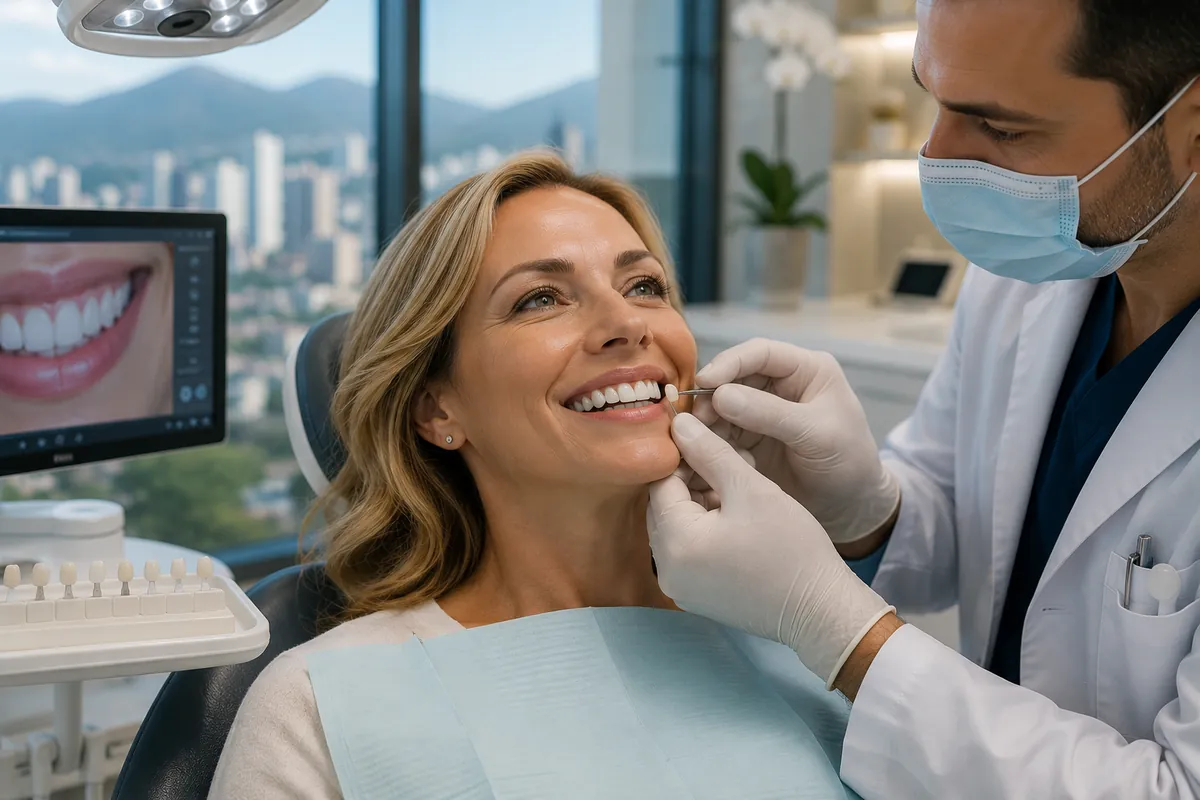
What Each Material Actually Is
Veneers are thin shells bonded to the front of your teeth to reshape your smile, but they are not all made from the same material. The two leading options today are dental porcelain and zirconia, and understanding the difference between them helps you have a more productive conversation with your cosmetic dentist.
Porcelain veneers are crafted from layered ceramic, most often feldspathic porcelain or pressed lithium-disilicate ceramic. These materials are built up or pressed and then carefully finished by a skilled dental ceramist. Their great advantage is that light passes through them much the way it passes through natural enamel, which is the secret to a result that looks genuinely real rather than artificial.
Zirconia, by contrast, is a high-performance ceramic made from zirconium dioxide. It began as a material for crowns and bridges that needed to withstand heavy chewing forces, and modern formulations have been refined into thinner, more translucent versions suitable for veneers. Zirconia is milled by computer from a solid block, giving it remarkable uniformity and strength. If you are new to the subject, our overview of dental veneers in Colombia explains the broader process and what to expect.
Appearance and Translucency
For most patients, the way a veneer looks is the deciding factor, and this is where the two materials differ most clearly. Natural teeth are not a flat, solid color; they have depth, subtle translucency at the edges and a glow that shifts with the light. Recreating that quality is the art of cosmetic dentistry.
Porcelain is the long-standing champion of natural appearance. Because it transmits and scatters light in a way that closely mimics tooth enamel, porcelain veneers blend seamlessly with your surrounding teeth, especially across the front of the smile where translucency matters most. A talented ceramist can layer different shades to match the way real teeth become slightly more translucent toward the biting edge.
Zirconia has historically been more opaque, which made early versions look brighter or flatter than porcelain. That opacity is actually useful in some cases, for example to mask a dark, discolored or root-canal-treated tooth that would show through a more translucent material. Newer high-translucency zirconia has narrowed the gap considerably and now produces very attractive, lifelike results. Still, for the most delicate, light-catching front teeth, many dentists consider porcelain the gold standard for sheer realism.
Strength, Durability and Your Bite
If appearance favors porcelain, strength is where zirconia clearly leads. Zirconia is one of the toughest ceramics used in dentistry, highly resistant to chipping, cracking and fracture under pressure. This makes it the standout choice for patients whose bite places extra demand on their teeth.
The clearest example is bruxism, the habit of grinding or clenching the teeth, often during sleep. People who grind generate forces that can chip thinner, more delicate porcelain over time. For these patients, a zirconia veneer offers meaningful peace of mind, and a dentist may also recommend a night guard to protect the investment regardless of material. Zirconia is likewise often preferred for back teeth or for anyone with a heavy, forceful bite.
This does not mean porcelain is fragile. Modern pressed ceramics are strong and, once bonded to healthy enamel, perform beautifully for the great majority of patients who do not grind. The honest answer is that your bite, not a marketing claim, should guide the choice. A careful smile-design assessment, including how your teeth meet when you chew, tells your dentist which material will hold up best for you.
Tooth Preparation and Longevity
A common worry is how much natural tooth must be removed to place a veneer. The good news is that both porcelain and zirconia veneers are designed to be conservative. An experienced cosmetic dentist removes only a thin layer of enamel, often less than a millimeter, so that the veneer sits flush and looks natural rather than bulky.
The exact amount depends on your starting teeth and your goals. Patients with smaller or worn teeth sometimes need almost no reduction, while correcting crowding or significant discoloration may call for slightly more. The guiding principle of responsible cosmetic dentistry is to preserve as much healthy tooth structure as possible, which is why a thorough plan precedes any drilling.
Longevity is similar for both materials when the work is done well. Quality veneers commonly last 10 to 15 years, and many endure longer with good oral hygiene, regular checkups and a bite that does not overload them. The bond between the veneer and your tooth is critical, so the dentist's skill and the laboratory's craftsmanship matter as much as the raw material. Protecting your veneers from grinding and avoiding habits like chewing ice or opening packages with your teeth keeps them looking their best for years.
Cost in Colombia and the Single-Trip Workflow
Cost is one of the main reasons patients travel for cosmetic dentistry, and the savings in Colombia are substantial. In the United States, a single porcelain veneer commonly runs around $1,500, and a full smile of eight to ten veneers can climb into five figures. In Colombia, quality veneers by a board-certified cosmetic dentist start from around $300 USD per tooth.
Zirconia and premium layered porcelain may sit at the higher end of the local range, while still costing a fraction of U.S. prices. The difference reflects lower operating and living costs in Colombia, not lower standards, since reputable clinics in Medellín use the same materials, milling technology and laboratory partners found in North America. For a deeper breakdown, see our guide to dental veneers cost in Colombia.
Many patients are pleasantly surprised that a full smile makeover can be completed in a single trip of about six days. A typical flow begins with a consultation and digital smile design, followed by preparation and the fitting of temporaries, then the placement of the final veneers once the laboratory has crafted them. HealthBridge helps coordinate this timeline so your appointments fit comfortably into one visit, and our team explains every step in plain language before you commit.
Ideal Use Cases and How to Decide
Rather than crowning one material the universal winner, it helps to match each to the situations where it excels. Porcelain is often the first choice for the visible front teeth, for patients who prize the most natural translucency, and for smiles where blending seamlessly with surrounding teeth is the top priority. It rewards artistry and produces results that are very hard to distinguish from natural enamel.
Zirconia tends to be ideal for patients who grind or clench, for those with a heavy bite, for back teeth, and for cases where a single dark or discolored tooth needs to be masked. Its strength and uniformity make it a dependable, long-lasting option, and with today's high-translucency formulations it can also look beautiful across the smile.
Ultimately, there is no single right answer that applies to everyone. The best material depends on the condition of your teeth, the way your bite functions and the specific look you want to achieve. That is precisely why a personalized smile-design assessment comes first. HealthBridge is a facilitator, not a clinic: we connect you with board-certified cosmetic dentists in Medellín, and our medical director and coordinator, Dra. Olga González, guides you through your options in clear, simple terms. You can learn more about how we work on the HealthBridge home page, and then let your dentist recommend the material that fits your teeth, your bite and your goals.
Considering dental & veneers in Colombia?
See the procedure, pricing and the process for international patients on our Cosmetic Dentistry & Veneers.
Procedure guides: Dental Implants Colombia · All-on-4 in Colombia: Cost from $5,500 per Arch