Joint Replacement
Knee Replacement Recovery Timeline: Week by Week
The Hospital Days: Standing Up Sooner Than You Think
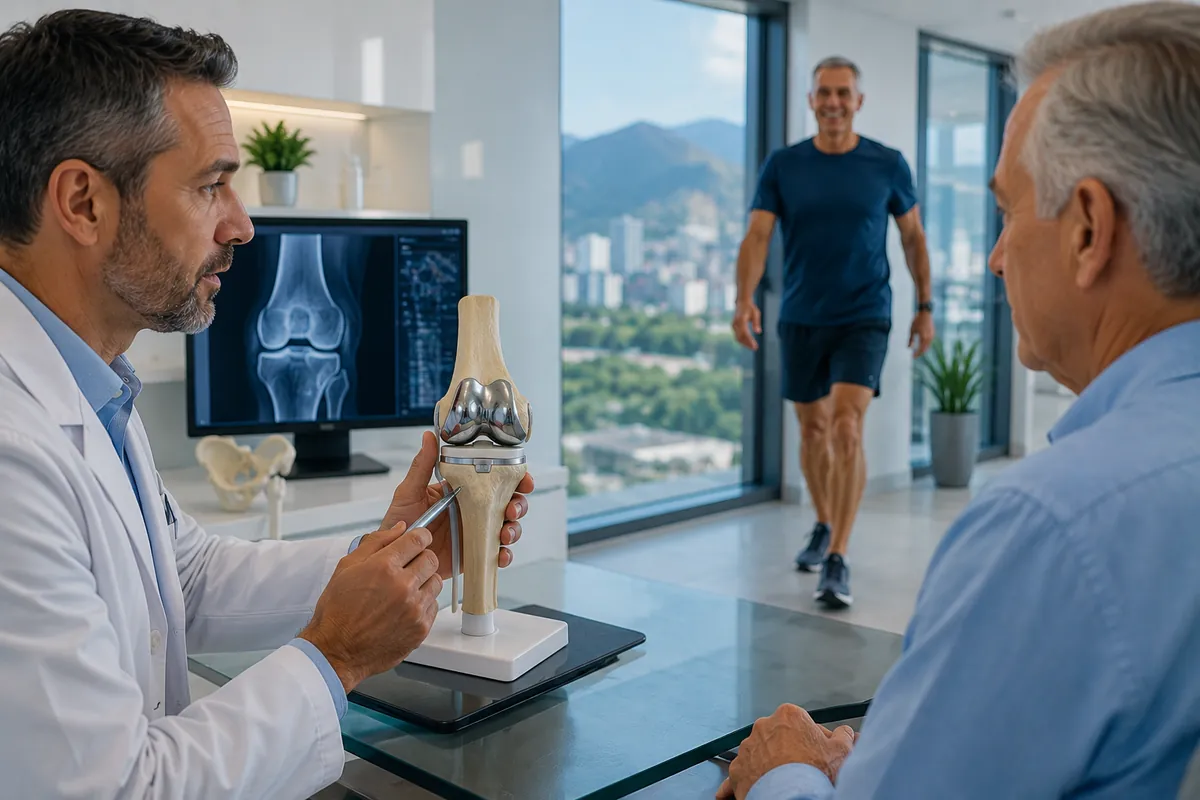
Recovery from a knee replacement begins almost immediately, and that surprises many patients. Modern orthopedic protocols favor early mobilization, which means a physical therapist will usually help you stand and take a few guided steps within the first day after surgery, sometimes the very same afternoon. Getting the joint moving early reduces stiffness, lowers the risk of blood clots and gives you an early sense of progress.
Pain control is the other priority during these first days. Your surgical team manages discomfort with a combination of medications and techniques designed to keep you comfortable enough to participate in therapy, because movement is part of the treatment, not something to delay until the pain is gone. You will also begin simple exercises in bed, such as ankle pumps and gentle leg lifts, that protect circulation and wake up the muscles around the new joint.
A typical hospital stay for a knee replacement is a couple of days, though it varies with your health and how the surgery goes. During this time the team teaches you how to use a walker, how to get safely in and out of bed, and what your first weeks at home should look like. If you are weighing the procedure itself, our overview of joint replacement in Colombia explains how the surgery and the board-certified orthopedic teams behind it work.
Weeks 1-2: From Walker to Cane and the Trip Home
The first two weeks at home are about steady, unglamorous progress. Most people start on a walker for stability and transition to a cane as balance and confidence improve, often within these early weeks. You will keep doing your prescribed exercises several times a day, gradually bending and straightening the knee a little more each session. This consistency, not intensity, is what drives recovery in this phase.
Wound care matters now. You will keep the incision clean and dry, watch how it is healing and follow your surgeon's instructions about dressings and showering. Some swelling and bruising around the knee is completely normal, and elevating the leg with ice helps control it. Walking short distances around the house several times a day keeps circulation strong and prevents stiffness.
One of the most common questions international patients ask is when they can safely fly home. Orthopedic surgeons generally consider air travel reasonable around 10 to 14 days after a knee replacement, once early healing is underway and the risk of blood clots has been managed, though your own surgeon makes the final call based on how you are recovering. Planning your stay around that window means you travel home with your recovery already on solid footing. For a clear picture of what the procedure itself costs, see our guide to knee replacement cost.
Weeks 3-6: Rebuilding Range of Motion and Strength
By the third week, the early soreness is fading and the real rehabilitation work begins. The two goals of this phase are range of motion, meaning how far you can comfortably bend and straighten the knee, and strength in the muscles that support the joint. Physical therapists track your bending angle closely, because regaining good flexion in these weeks strongly influences how the knee will function long term.
Your exercise program becomes more demanding in a controlled way. You will progress from gentle movements to light strengthening, stationary cycling and balance work, always guided so you challenge the joint without overloading it. Many patients are able to set aside the cane during this period and walk unaided for longer distances, though everyone moves at their own pace and pushing too hard too soon can cause setbacks.
Discomfort and swelling after exercise are expected and not a reason to stop; they are part of the tissue adapting. What matters is doing the work consistently. This is exactly where structured physical therapy pays off, and it is also why recovering part of the time in Medellín with included PT can be such an advantage, a point we return to below. If you are also considering the hip, our guide to hip replacement follows a similar recovery philosophy.
Weeks 6-12: Returning to Normal Life
Between six and twelve weeks, most patients feel they are getting their life back. Everyday activities such as walking comfortably, climbing stairs with more ease, driving again and returning to a desk job typically become possible in this window, with timing depending on which knee was replaced, the kind of work you do and your surgeon's clearance. The knee feels more like your own and less like something you are protecting.
Physical therapy continues, but the emphasis shifts toward endurance, balance and the specific movements your daily life requires. You will likely be encouraged to take up low-impact activities such as walking, swimming or cycling, which build strength without jarring the new joint. High-impact activities like running or jumping are usually discouraged for the long term to protect the implant, but the range of comfortable activity you regain is wide.
It is normal at this stage to still notice some swelling at the end of an active day or occasional stiffness in the morning, both of which continue to ease over the following months. Patience remains important: the knee is still maturing, and steady habits now pay off in your final result.
3 to 12 Months: Full Recovery and Realistic Milestones
While the hardest work is behind you by three months, full recovery from a knee replacement is a longer journey that typically unfolds over the rest of the first year. Strength continues to build, residual swelling fades, and the sense that the knee is part of you rather than a repair keeps deepening. Many patients describe reaching around the six-month mark feeling genuinely strong, with continued gains for several more months.
Realistic milestones help you measure progress without discouragement. Walking comfortably and managing stairs come relatively early; returning to favorite low-impact hobbies and longer outings comes later; and the final ten percent of strength and confidence is often the slowest to arrive. Comparing yourself to where you were a month ago, rather than to your pre-surgery self on a good day, gives a fairer picture of how far you have come.
Throughout this period, keeping up a home exercise routine protects everything you have gained. The goal of the whole process is not just a knee that bends but a knee that lets you move through your life with confidence, and the patients who reach that goal are almost always the ones who stayed consistent with their rehabilitation.
Warning Signs and Recovering Part of the Time in Medellín
Knee replacement is a well-established and very successful operation, but like any surgery it carries risks you should watch for. The two most important warning signs are blood clots and infection. Signs of a possible clot include new calf pain, swelling, warmth or redness in the leg, and sudden shortness of breath or chest pain, which is an emergency. Signs of infection include increasing redness, warmth or drainage around the incision, a fever, or pain that worsens instead of improving. If you notice any of these, contact your care team promptly; early attention is what keeps small problems small.
This is where recovering part of the time in Medellín offers a real advantage. Instead of being discharged with a sheet of instructions and left to manage alone, you spend your crucial early days near your surgical team, with structured physical therapy built into your stay. Those guided early PT sessions establish good form and momentum at the exact moment they matter most, so you fly home already on the right track rather than starting from scratch.
HealthBridge is a facilitator, not a clinic. We connect you with board-certified orthopedic surgeons and qualified physiotherapists, and we coordinate consultations, vetting, logistics and aftercare so you can focus on healing. Dra. Olga Gonzalez serves as our medical director and coordinator, guiding you in plain language at every step. Medellín's mild spring-like climate, comfortable recovery accommodations and convenient time zone make it a calm place to begin a recovery that you will continue at home. You can learn more about how we work on the HealthBridge home page.
Considering joint replacement in Colombia?
See the procedure, pricing and the process for international patients on our Joint Replacement Surgery.
Procedure guides: Knee Replacement in Colombia · Hip Replacement in Colombia · Shoulder Replacement in Colombia from $13,000 USD