Joint Replacement
Joint Replacement Implant Types and Materials Explained
In Medellín from $12,000 USD · 10–16 day stay Get a free quote →
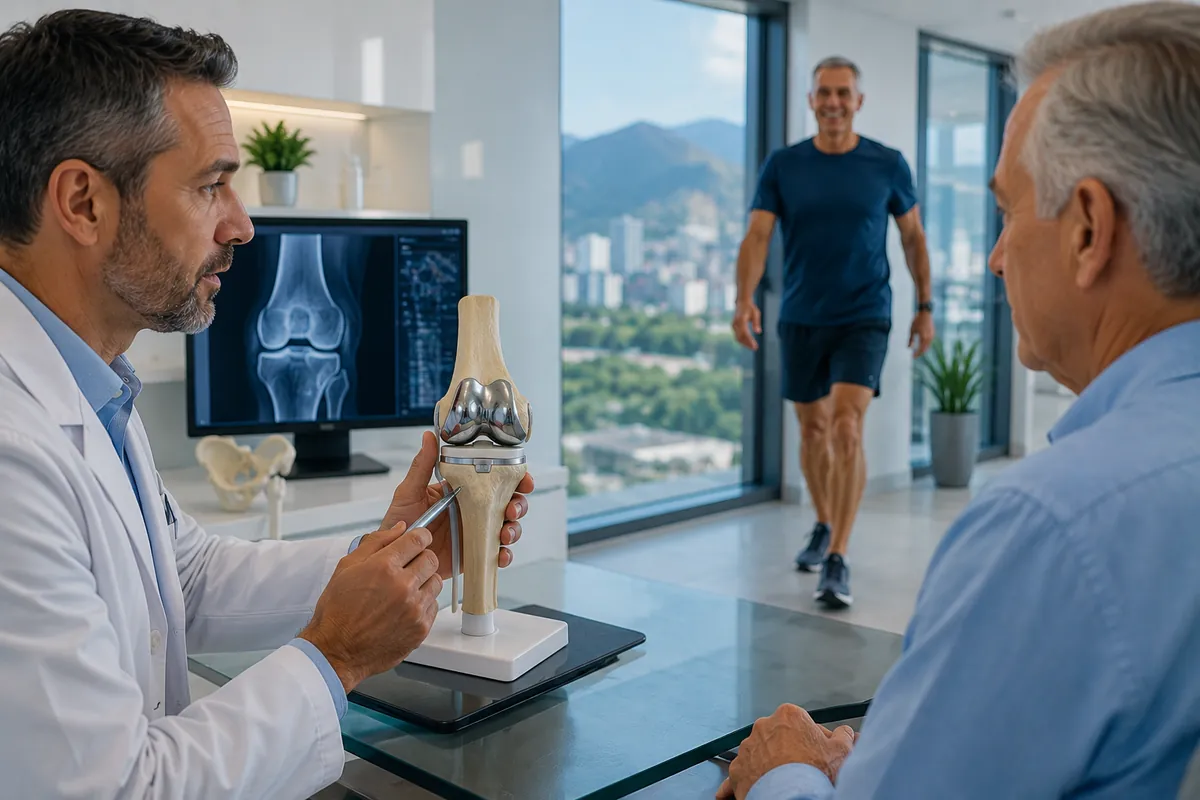
What an Artificial Joint Is Actually Made Of
A modern joint replacement is a small piece of engineering designed to recreate the smooth, painless movement that arthritis has taken away. Whether it is a hip or a knee, the implant has two basic parts that meet at a gliding surface, and the materials used for that surface, called the bearing, largely determine how the joint feels and how long it lasts.
The components are made from biocompatible materials chosen for strength, low friction and a proven track record inside the human body. Metal parts are typically titanium or cobalt-chromium alloys, the spacer is usually a medical-grade plastic called polyethylene, and some surfaces use a hard, ultra-smooth ceramic. These are not experimental materials; they are the result of decades of orthopedic research and are used in millions of operations worldwide every year.
Understanding the basic vocabulary helps you have a more confident conversation with your surgeon. If you are exploring treatment abroad, our overview of joint replacement in Colombia explains the wider journey, while this article focuses on the implant itself, what it is made of, how it is held in place and how surgeons decide which option fits you best.
The Main Bearing Surface Combinations
The bearing surface is where the two sides of the joint rub together with every step, so its materials matter a great deal. There are three combinations you will hear about most often, and each has its place.
Metal-on-polyethylene is the most widely used and most thoroughly studied combination, with a metal component gliding against a polyethylene liner. It has an excellent long-term record, is versatile across many patients and is often the sensible default. Ceramic-on-polyethylene pairs a ceramic head or surface with a polyethylene liner; ceramic is extremely hard and smooth, which can reduce wear and is popular for younger or more active patients. Ceramic-on-ceramic uses ceramic on both sides for the lowest friction and wear of all, though it is reserved for selected cases because ceramic, while very strong, is more brittle than metal.
No single combination is best for everyone. Each balances wear resistance, durability, cost and the small risks unique to that material. Your surgeon weighs these factors against your own situation, which is why the decision is made together during your evaluation rather than chosen from a catalog in advance.
Why Highly Cross-Linked Polyethylene Changed the Game
Polyethylene is the quiet hero of modern joint replacement. For decades, the gradual wearing of the plastic liner was a leading reason implants eventually loosened and needed revision. Tiny wear particles released into the joint could trigger the body to resorb bone around the implant, shortening its life.
The introduction of highly cross-linked polyethylene addressed that problem directly. By treating the plastic so its molecular chains bond more tightly, manufacturers created a material that resists wear dramatically better than the conventional polyethylene of earlier generations. Many versions also add vitamin E as an antioxidant to keep the plastic stable over time. The practical result is a liner that holds up far longer under the stresses of daily walking, climbing stairs and exercise.
This advance is one reason today's replacements are expected to last longer than those implanted decades ago. Importantly, highly cross-linked polyethylene is the modern standard used in accredited hospitals everywhere, including in Colombia, so an international patient is not receiving an older or lesser version of the technology.
Cemented vs. Cementless Fixation
Once the surgeon selects the bearing materials, the next decision is how to anchor the implant to your bone. There are two well-established methods, and both are reliable when matched to the right patient.
Cemented fixation uses a fast-setting bone cement to bond the implant securely to the bone during surgery. It creates an immediate, stable fixation and has a long, dependable history, which is why it is often favored for older patients or for bone that is softer or weaker. Cementless, or press-fit, fixation relies on implants with a specially textured or porous surface. The component is fitted tightly into prepared bone, and over the following weeks your own bone grows directly into the surface to lock it in place, creating a strong biological bond. Press-fit is frequently chosen for younger patients with strong, healthy bone.
Sometimes a surgeon uses a hybrid approach, cementing one part and press-fitting another, particularly in the knee. As with bearing surfaces, neither method is universally superior. The right choice depends on your bone quality, age and the specific joint, and your surgeon will explain which they recommend and why. The same logic applies whether you are considering a hip or comparing a partial vs total knee replacement.
How Surgeons Choose the Right Implant for You
With several materials and fixation methods available, you might wonder how a surgeon settles on one combination. The answer is that the choice is individualized, guided by a few practical factors rather than by fashion or marketing.
Age and life expectancy matter because a younger patient will place more years and more demand on the implant, which often steers the surgeon toward harder-wearing bearings and press-fit fixation. Activity level is closely related: an active patient who hikes, plays sports or works on their feet may benefit from a more wear-resistant pairing such as ceramic-on-polyethylene. Anatomy and bone quality guide the fixation decision, since strong bone supports press-fit components well while softer bone may do better with cement.
Other considerations include any allergies, your overall health, the particular joint being replaced and your surgeon's own experience with specific systems. The goal is a durable, well-fitting joint that suits your life, not the most expensive or the newest item available. This is exactly the kind of personalized planning you should expect, and it is a hallmark of the board-certified orthopedic surgeons we work with. You can read more about our approach on the HealthBridge home page.
Same Global Brands, Realistic Longevity and Safety in Colombia
One of the most common and understandable worries for international patients is whether a lower price means a lower-quality implant. It does not. The accredited hospitals our partner surgeons use in Colombia source their implants from the same major international manufacturers whose products are used routinely in the United States and Europe. These are globally regulated devices, not budget substitutes, and the cost savings come from lower facility, staffing and living costs, not from cutting corners on the hardware placed inside you.
Modern implants also offer encouraging longevity. While every patient is different, large international studies suggest the majority of hip and knee replacements remain functional well beyond fifteen years, and many last two decades or more, helped by the advances in cross-linked polyethylene and refined surgical technique described above. Your weight, activity and how closely you follow rehabilitation all influence that lifespan, which your surgeon will discuss frankly with you.
HealthBridge is a facilitator, not a clinic. We connect you with board-certified orthopedic surgeons operating in accredited hospitals, verify credentials, and coordinate consultations, logistics and aftercare. Dra. Olga Gonzalez serves as our medical director and coordinator, helping you understand your options in plain language so that the implant chosen is the one that genuinely fits your body and your life. If you are weighing a specific procedure, our guide to hip replacement walks through what to expect step by step. With the right team and a well-chosen implant, the goal is simple: a stable, comfortable joint that lets you move freely again.
Considering joint replacement in Colombia?
See the procedure, pricing and the process for international patients on our Joint Replacement Surgery.
Procedure guides: Knee Replacement in Colombia · Hip Replacement in Colombia · Shoulder Replacement in Colombia from $13,000 USD